Quick Overview
This guide makes it simple to navigate and evaluate an automation platform. We tested 27 n8n alternatives, narrowed them to 14, and broke down what each does best. Whether you care about AI, governance, open source, or just quick wins, this will help you spot the right fit fast.
Top 6 n8n Alternatives Shortlist
Workflow builders give you primitives and ask you to assemble the agent. A personal AI assistant ships the agent already running. Here are the six picks that earned the shortlist, starting with the one that operates at a different layer entirely.
- Vellum: the open-source personal AI assistant. Where workflow builders give you a canvas, Vellum gives you an assistant with memory across Mac, iOS, web app, voice, email, Telegram, and Slack. Best for individuals who want compounding productivity gains without designing workflows.
- Make, a visual scenario builder with deep branching, iterators, and data transforms. Best for power users coming from n8n who want a hosted UI.
- Pipedream, a developer-first automation platform with serverless code steps in JavaScript, Python, and TypeScript. Best for engineers who want code over canvases.
- Zapier, the widest connector catalog with a simple linear builder. Best for non-technical teams gluing SaaS apps together fast.
- Pabbly Connect, flat-rate pricing with generous task limits and a Zapier-style canvas. Best for small businesses watching unit costs.
- Stack AI, an AI-native workflow and agent platform with enterprise compliance options. Best for teams building AI apps with governance on day one.
Evaluating AI automation platforms can be overwhelming. The market is crowded, pricing is opaque, and it’s easy to waste weeks testing the wrong tool.
Our aim is to save you time by giving you a clear look at the strongest n8n alternatives and when they make sense.
This guide walks you through the top alternatives to n8n , breaking down what each tool is good at, where it falls short, and how it stacks up.
The goal is to help you quickly figure out which option makes the most sense for your team.
For every platform, you’ll see:
A quick overview Who it’s best for Standout strengths and trade-offs A pricing snapshot How it compares to n8n
Whether you care about ease of use , AI readiness, governance, open-source flexibility, or cost, you’ll see right away which category each tool belongs to.
Note on pricing: Figures are directional and change frequently. Always confirm on the vendor’s site.
Our review process
We evaluated 27 platforms and scored them against common buyer needs for automation and AI app building. Here’s the simple framework we used to keep rankings structured and fair, weights add up to 100%.
We scored every platform based on the following criteria:
Core Automation Capabilities (25%) AI Readiness (20%) Ecosystem & Extensibility (15%) Reliability & Performance (10%) Deployment & Governance (10%) Usability (10%) Customer Support & Resources (10%)
No affiliate links, no sponsored placements. If a tool’s in the Top 14, it’s because it proved itself based on our review criteria. If it isn’t, we’ll explain why so you can still decide if it’s right for your niche.
Best n8n alternatives (2026)
1. Vellum
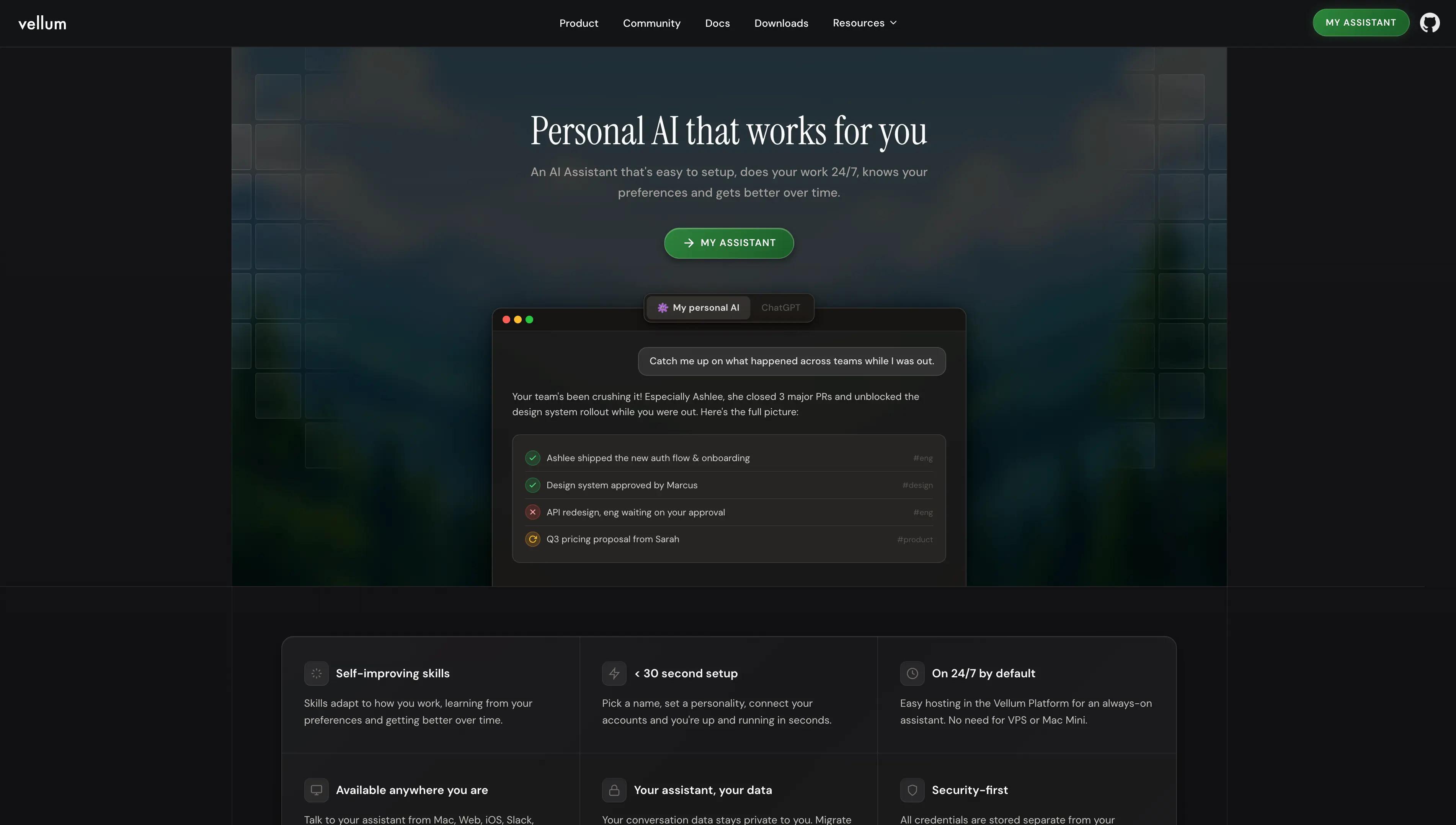
Vellum is the open-source personal AI assistant for individuals. Where n8n hands you a canvas and asks you to wire up the workflow, Vellum hands you an assistant that already knows how to handle the judgment-heavy daily work: research, planning, drafting, scheduling, and follow-ups. It runs as a native Mac app on your machine or in Vellum Cloud, with iOS, web app, voice, email, Telegram, and Slack surfaces that share one memory. Traditional builders ship primitives. Vellum ships a working agent.
Score: 100
Standout strengths :
Persistent memory engine that builds a real model of you over time, preferences, projects, and context that compound across every channel and surface. Seven surfaces sharing one memory: Mac, iOS, web app, voice, email, Telegram, Slack. Open source under MIT. Local-first architecture with credential isolation. Proactivity engine for autonomous hourly check-ins and background task execution. Skills system, install community-built capabilities or write your own in Python.
Trade-offs :
- Brief learning curve as your assistant builds context on you.
Pricing snapshot: Free Base plan. Pro from $50/mo with pay-as-you-go credits, configurable compute and storage, and your assistant's own email and subdomain.
Compared to n8n. n8n is a canvas: you design the workflow and maintain it. Vellum is the assistant; it handles the work directly, with memory that compounds the more you use it. The productivity gain isn't a faster builder, it's not needing to build.
2. Make (formerly Integromat)
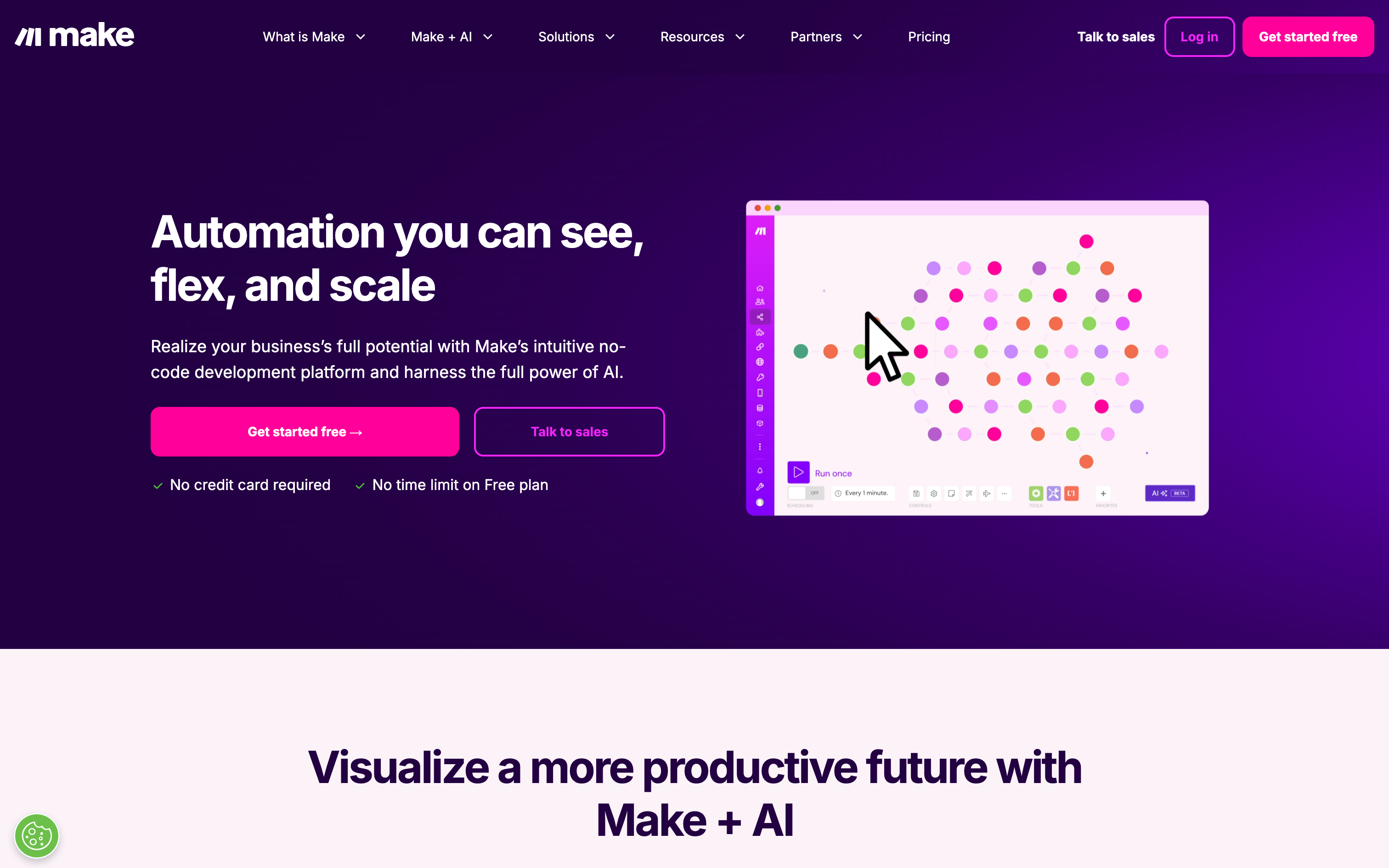
Make is a visual scenario builder with deep branching, iterators, and data transformations.
It is best for ops teams needing multi-step logic and cost-effective, high-volume automations.
Score: 96
Standout strengths:
Advanced routing and mapping Cost-effective operations at scale Strong error handling and replay
Trade-offs:
Steeper learning curve than Zapier Complex UI even for simple workflows
Pricing snapshot: Free tier; paid plans start at $9/month based on operations, enterprise plans available.
Compared to n8n, both have complex UI’s but Make has more off-the-shelf UI features and operations-based pricing. n8n is stronger for self-hosting, custom nodes, and developer control.
3. Pipedream
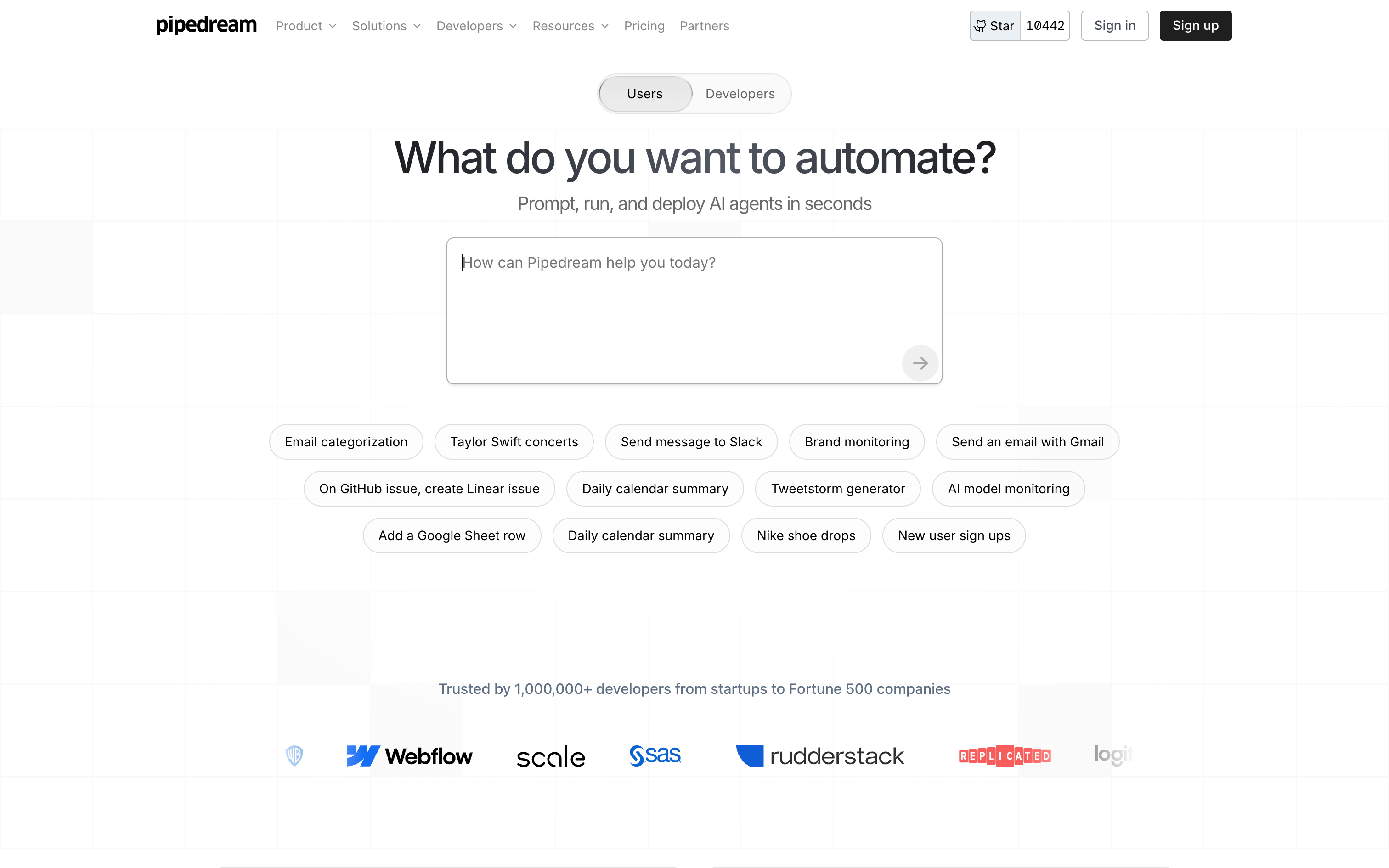
Pipedream is a developer-focused automation platform with serverless components in JavaScript/Python/TypeScript.
It is best for dev teams that prefer code-level control and modern serverless runtimes.
Score: 92
Standout strengths:
First-class coding experience with packages and NPM Real-time event sources and webhooks Good secrets, logs, and observability
Trade-offs:
Less friendly for non-technical users Library smaller than low-code peers
Pricing snapshot: Generous free tier; paid starts at $29/month with usage-based pricing. Customizable enterprise pricing available.
Compared to n8n, Pipedream is just as developer-friendly. Pipedream is more code-first, while n8n blends no-code UI with extensibility and self-hosting.
4. Zapier
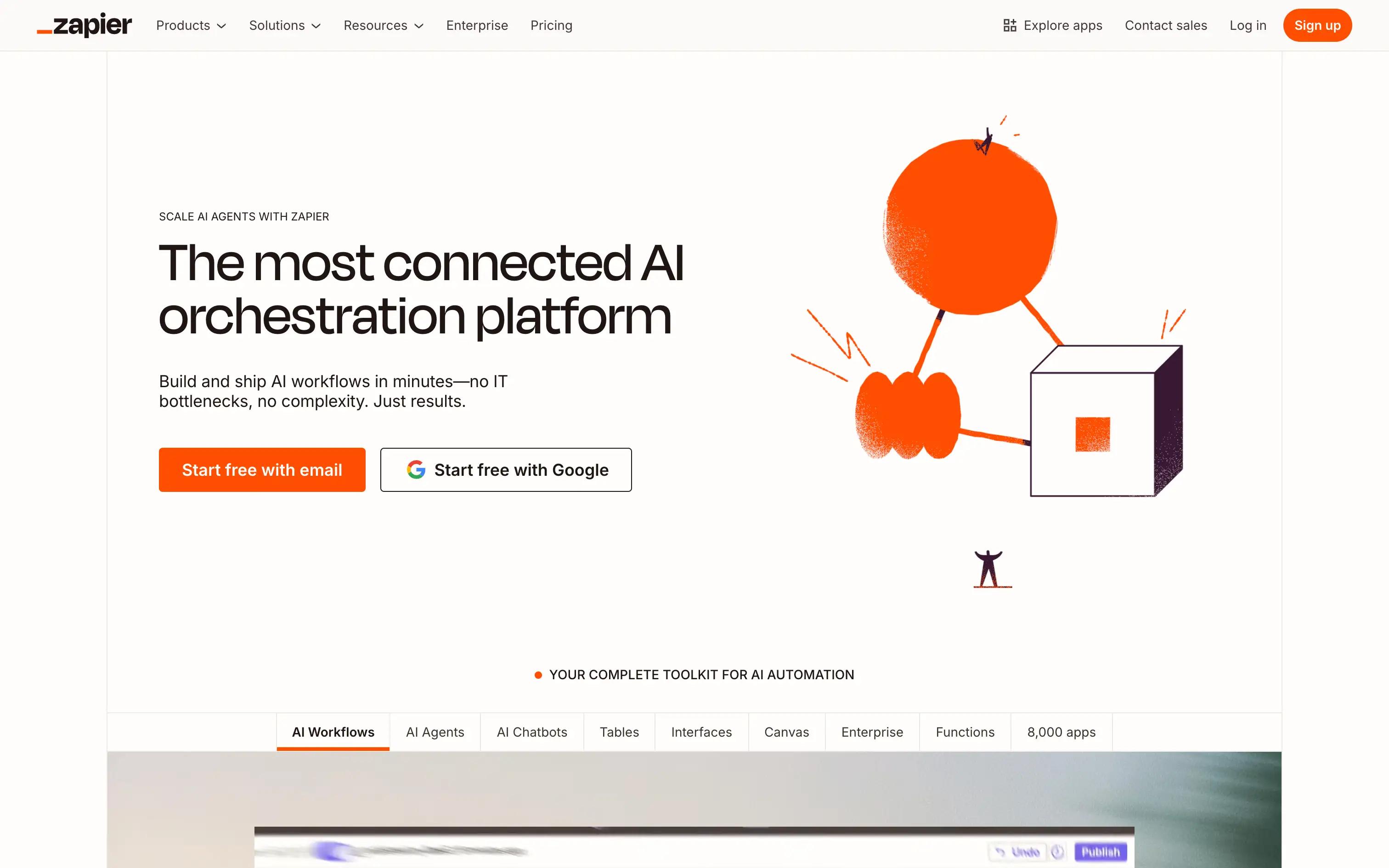
Zapier is one of the most widely known no-code automation platform with a huge app directory and simple, linear workflows.
Its best for business users who want quick and simple non-technical automations across popular SaaS tools.
Score: 89
Standout strengths:
Massive connector library and templates Very approachable UI and onboarding Reliable for lightweight, event-driven tasks
Trade-offs:
Limited complex logic, testing, and versioning on lower tiers Costs can rise with volume and premium apps Not liked for AI workflows, more ideal as a data collector
Pricing snapshot: Free tier; paid plans start at $20/month, enterprise plans available.
Compared to n8n, Zapier is easier for non-technical users and faster to start. n8n’s workflow builder is very complex and built for technical users, making Zapier win come from simplicity and breadth of plug-and-play connectors.
5. Pabbly Connect
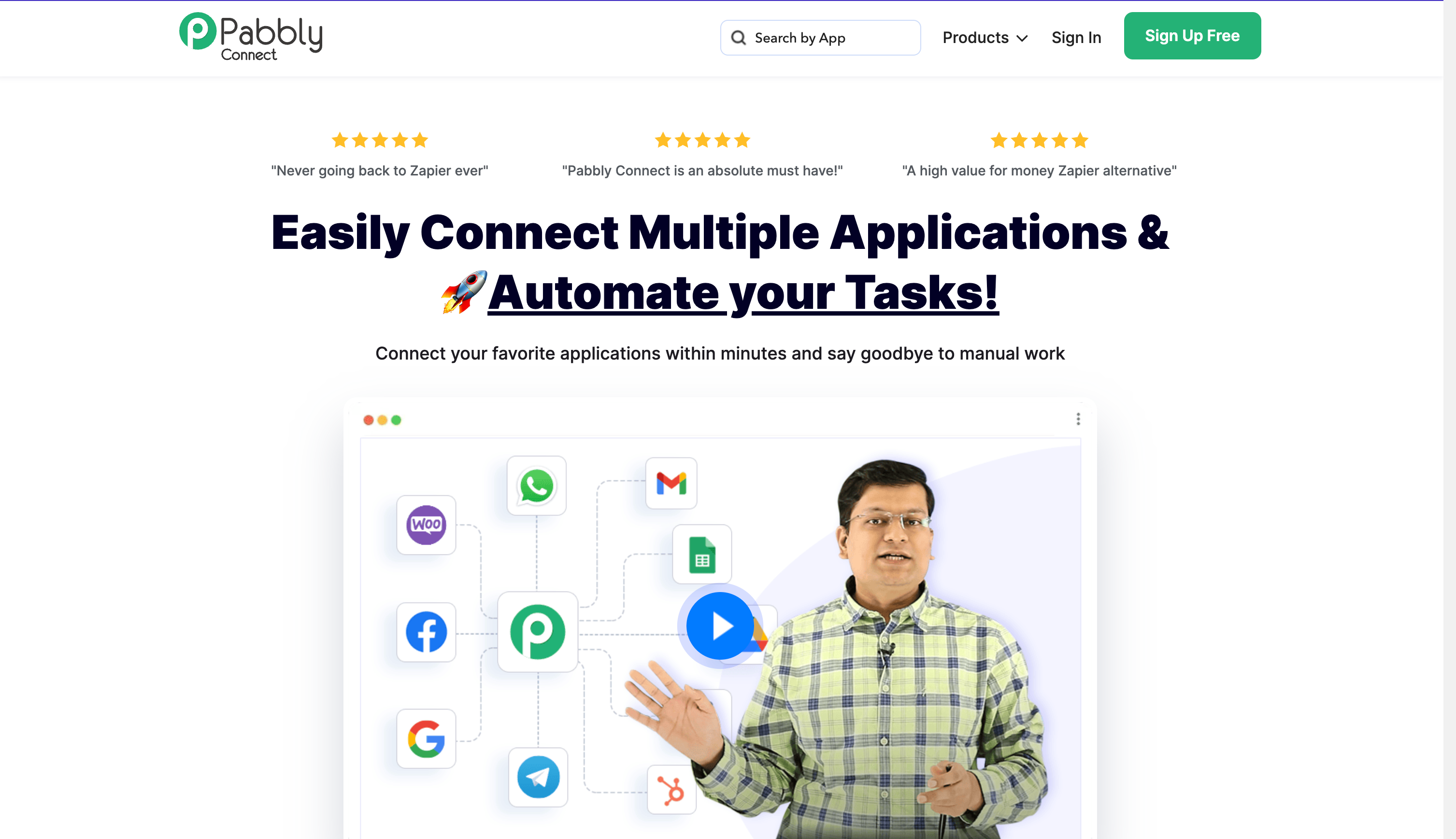
Pabbly Connect is a budget-friendly automation SaaS with a Zapier-like interface and generous task limits.
It is best for SMBs that want cost-effective, no-code automations at scale.
Score: 85
Standout strengths :
Flat-rate pricing with no charges for internal steps 1,000+ app connectors including Gmail, Shopify, WordPress Easy-to-use workflow builder with conditional logic
Trade-offs :
Smaller ecosystem than Zapier/Make Fewer advanced DevOps features
Pricing snapshot: Free tier; paid plans start at $14/month, no enterprise plans.
Compared to n8n, Pabbly is cheaper and simpler for standard SaaS automations; n8n offers deeper extensibility and self-hosting.
6. StackAI
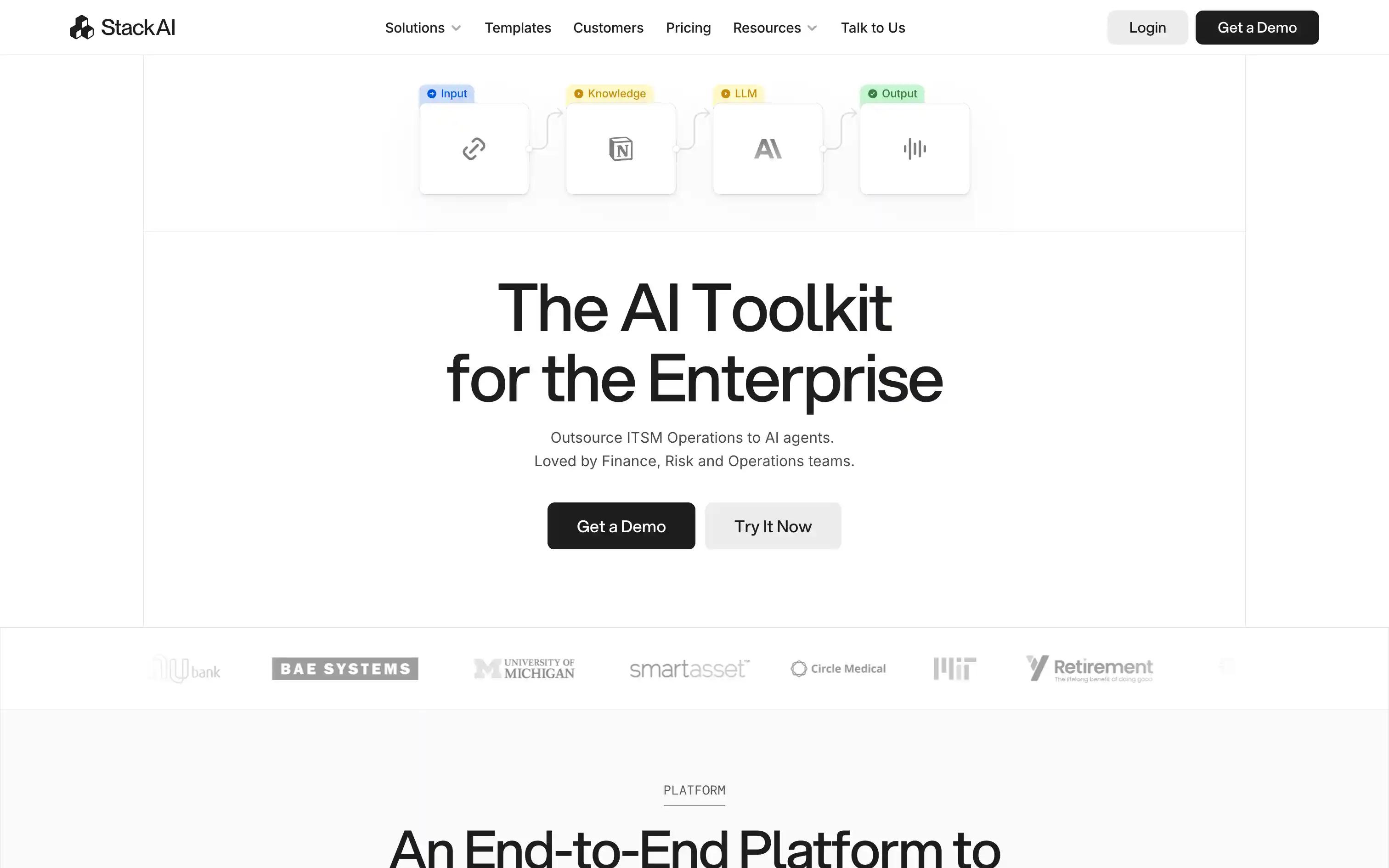
Stack AI is a AI-native workflow and agent platform with enterprise compliance options.
It’s best for organizations building AI apps that require security and governance.
Score: 82
Standout strengths :
Built-in AI routing and text generation Knowledge base ingestion for contextual workflows Multiple deployment options (cloud, hybrid, on-prem)
Trade-offs :
Overkill for small automations Paid plans target enterprise pricing
Pricing snapshot: Free tier; enterprise plans available.
Compared to n8n, StackAI has deeper AI-native features and compliance. n8n is broader and more cost-flexible.
7. Microsoft Power Automate
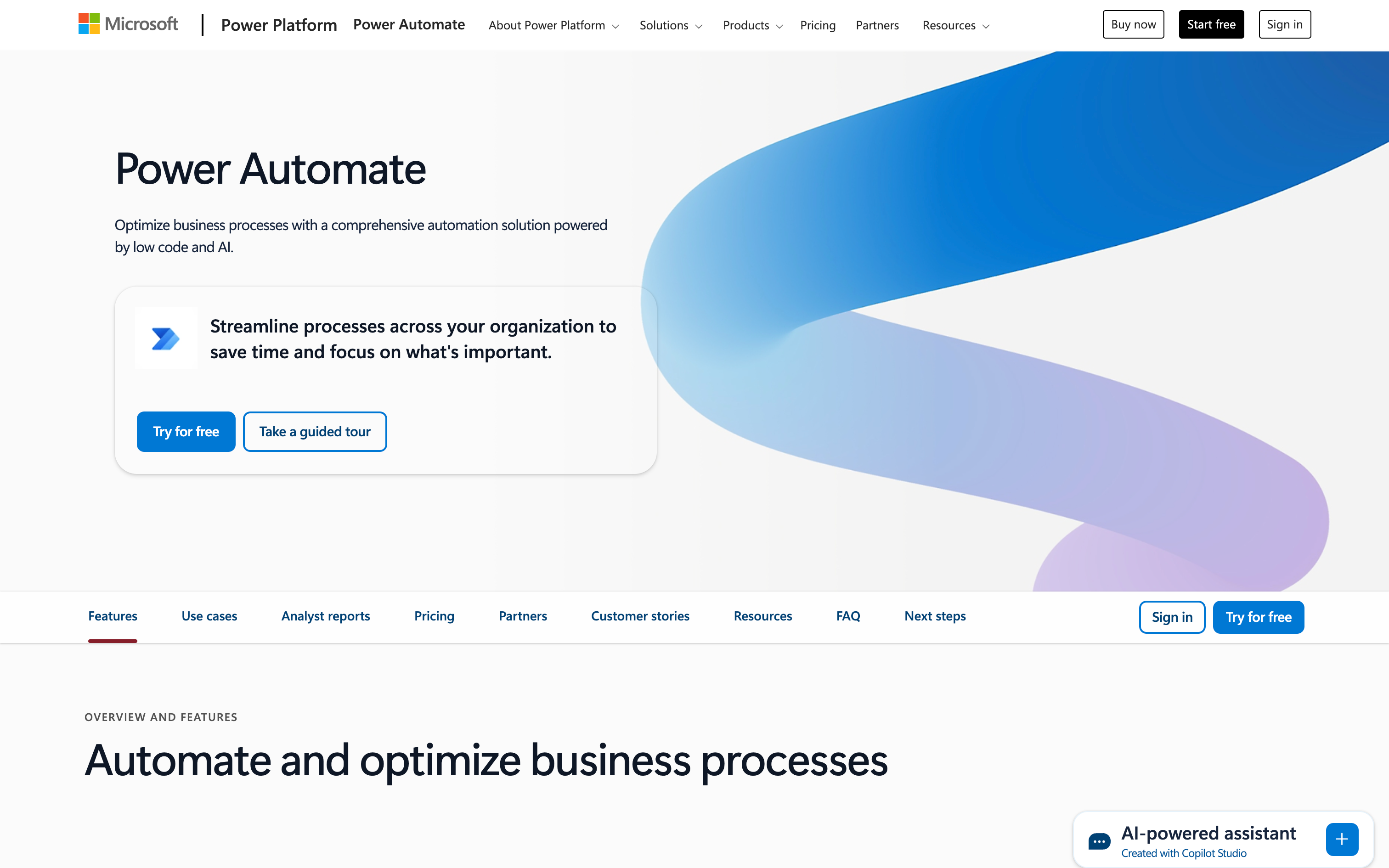
Microsoft Power Automate enables automation across Microsoft 365, Dynamics, and beyond, with RPA options.
It is best for organizations standardized on Microsoft with compliance and governance needs.
Score: 79
Standout strengths:
Deep integration with Microsoft ecosystem Approvals, governance, and security features RPA for desktop/legacy systems
Trade-offs:
Licensing can be complex Non-Microsoft connectors sometimes lag
Pricing snapshot: Free tier; paid plans start at $15/month, no enterprise plans available.
Compared to n8n, Microsoft Power Automate is better for Microsoft-centric stacks with built-in governance. n8n offers open source flexibility and easier custom integrations across diverse stacks.
8. Workato
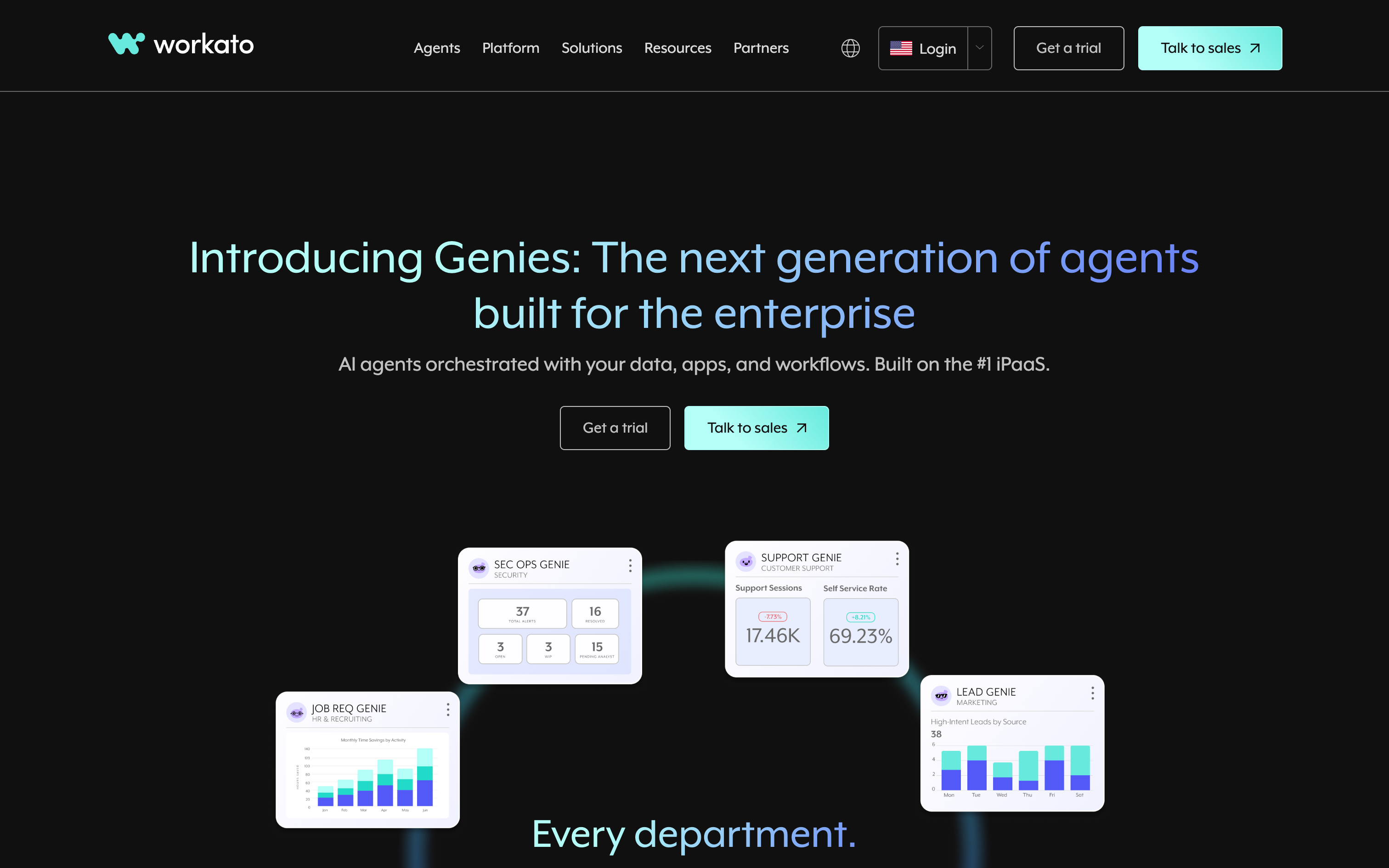
Workato is an enterprise iPaaS for complex, mission-critical automations with strong governance.
It’s best for large orgs needing scale, SLAs, role-based controls, and advanced lifecycle management.
Score: 76
Standout strengths:
Enterprise-grade governance and security Rich connector catalog, SDK, event streams Strong lifecycle, testing, and monitoring
Trade-offs:
Premium pricing and annual contracts Overkill for simple SMB automations
Pricing snapshot: Sales gated free tier; enterprise plans available.
Compared to n8n, Workato brings enterprise rigor out-of-the-box. n8n can reach similar outcomes with self-hosting and engineering time, often at lower software cost.
9. Tray.ai
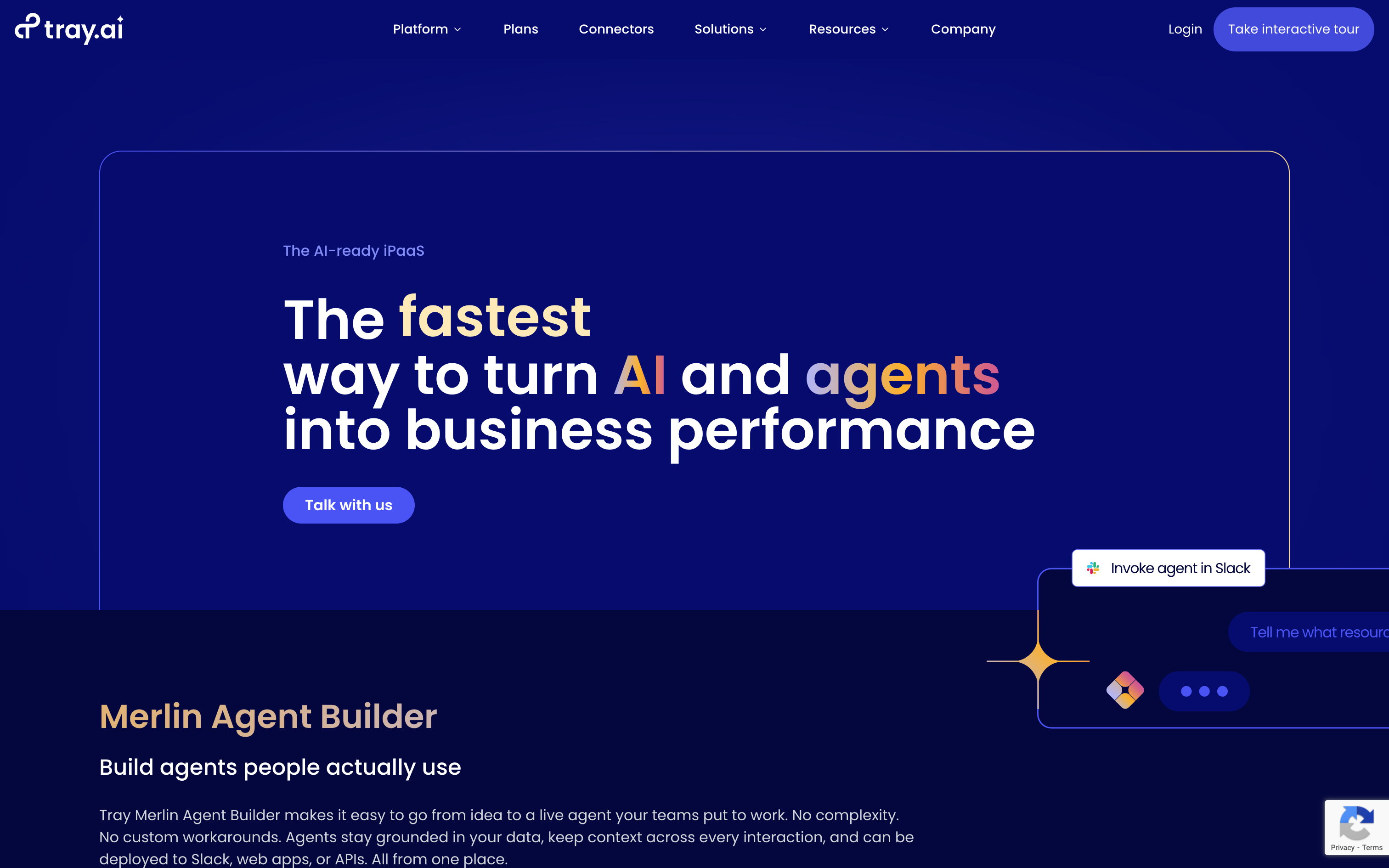
Tray.ai is a low-code enterprise automation with developer-friendly features for APIs and JSON.
It’s best for mid-market to enterprise teams building data-rich workflows and integrations.
Score: 73
Standout strengths:
Granular data transforms and branching Good API management, debugging, and logs Team collaboration controls
Trade-offs:
Higher cost vs SMB tools Learning curve for non-technical users
Pricing snapshot: No free tier; enterprise plans available.
Compared to n8n, Tray offers enterprise polish and support. n8n is more centric on its self-hosted control and open extensibility at a potentially lower TCO, if you can manage infrastructure.
10. Celigo
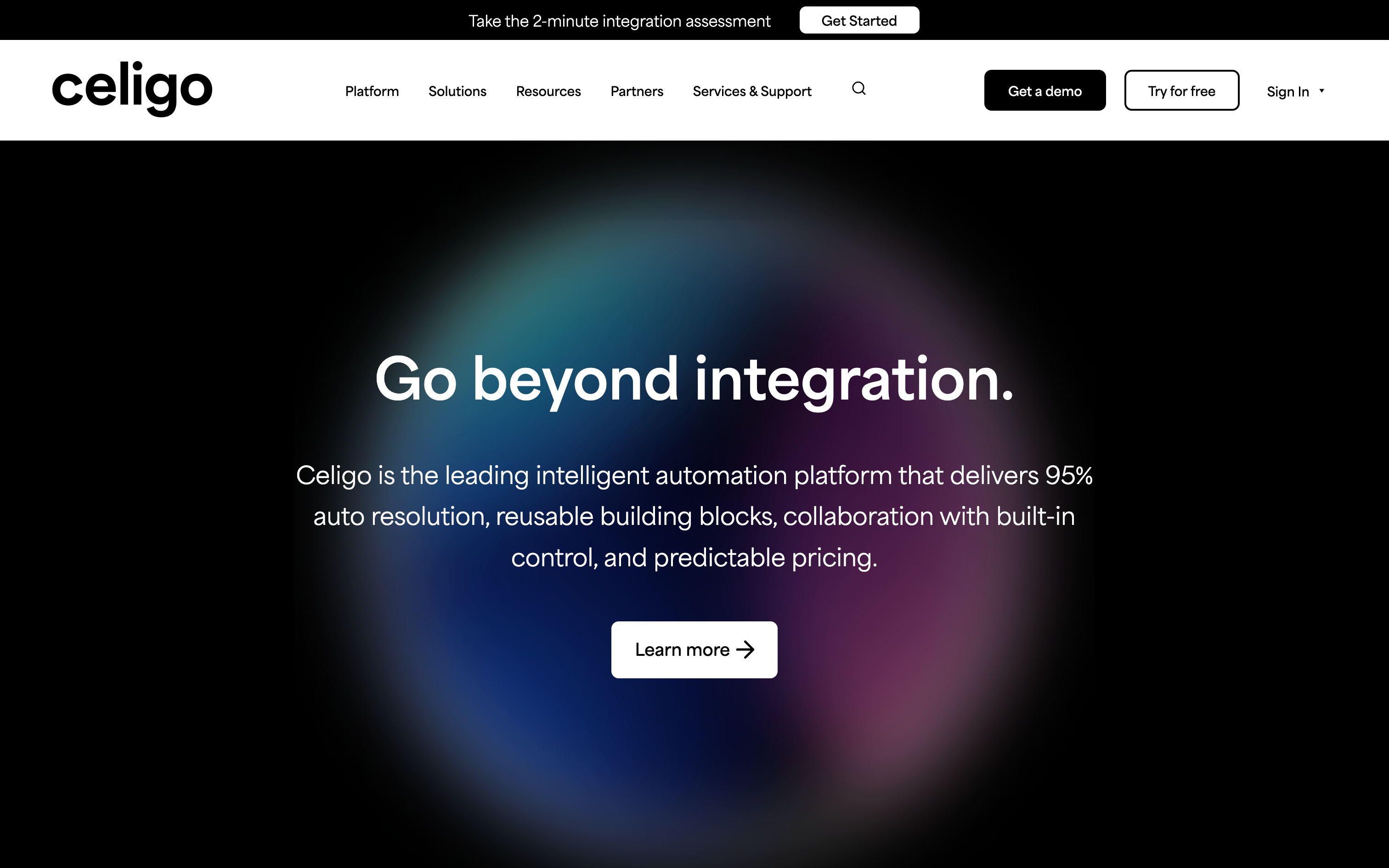
Celigo is a iPaaS with deep prebuilt flows, especially for ERP/ecommerce (e.g., NetSuite).
Its best for rev-ops, fin-ops, and eCommerce teams integrating ERP, marketplaces, 3PLs, and SaaS.
Score: 71
Standout strengths:
Strong prebuilt integrations for commerce and ERP Solid mapping, error handling, and templates Strong NetSuite expertise
Trade-offs:
Best value if you use supported ERPs Pricing and packaging lean enterprise
Pricing snapshot: Free tier; enterprise plans available.
Compared to n8n, Celigo speeds ERP/ecommerce projects with accelerators. n8n needs more custom work, but offers greater flexibility and control.
11. SnapLogic
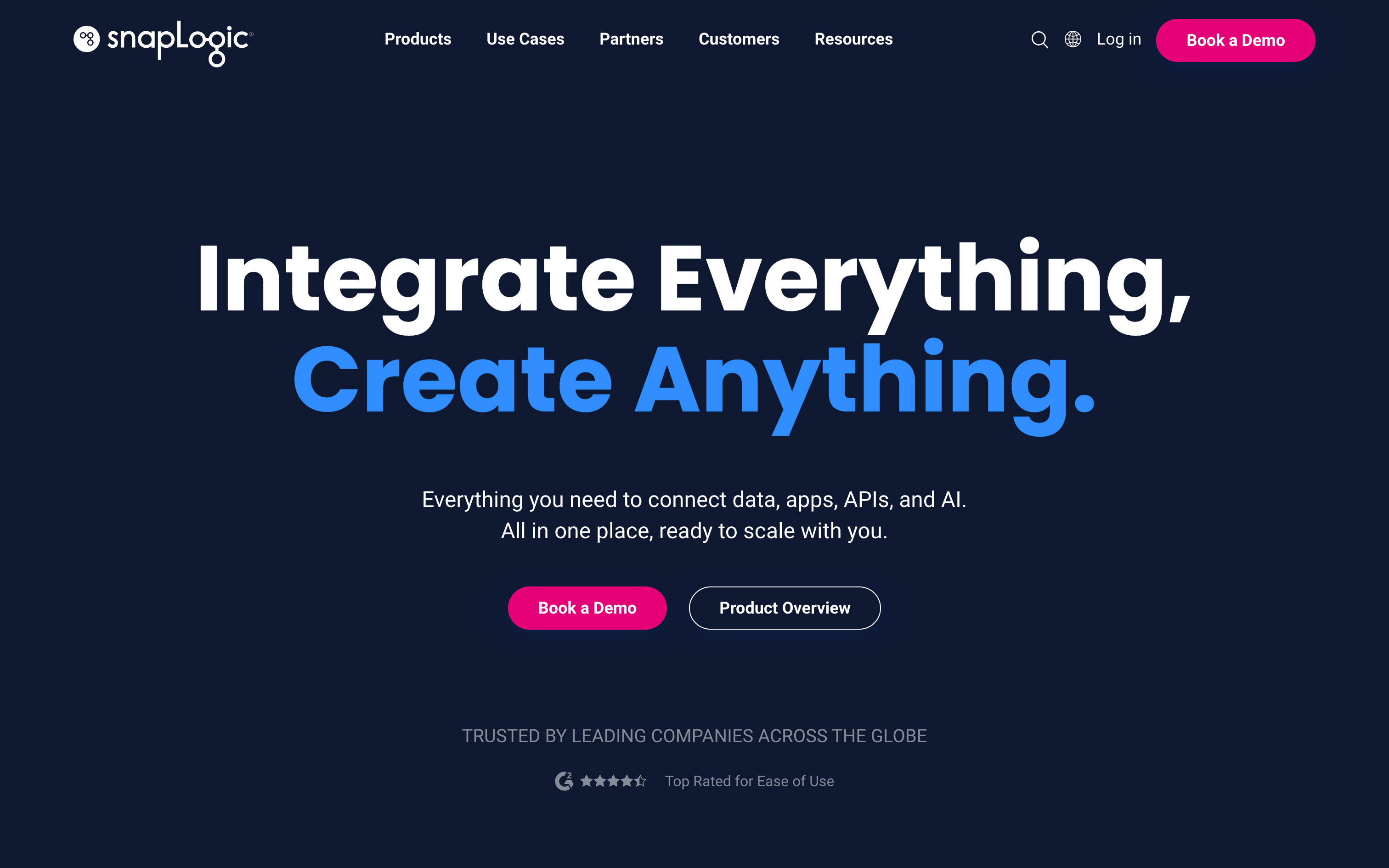
SnapLogic is an enterprise iPaaS with AI-assisted pipeline building for apps, APIs, and data.
It’s best for large orgs orchestrating app integrations and data pipelines at scale.
Score: 69
Standout strengths:
Broad connector set including data platforms Governance, lineage, and lifecycle controls AI features to accelerate development
Trade-offs:
Enterprise pricing and complexity Overhead for small teams
Pricing snapshot: No free tier; enterprise plans available.
Compared to n8n, SnapLogic is a full enterprise iPaaS with strong data integration. n8n is lighter-weight, open, and cost-flexible for mixed technical teams.
12. Parabola
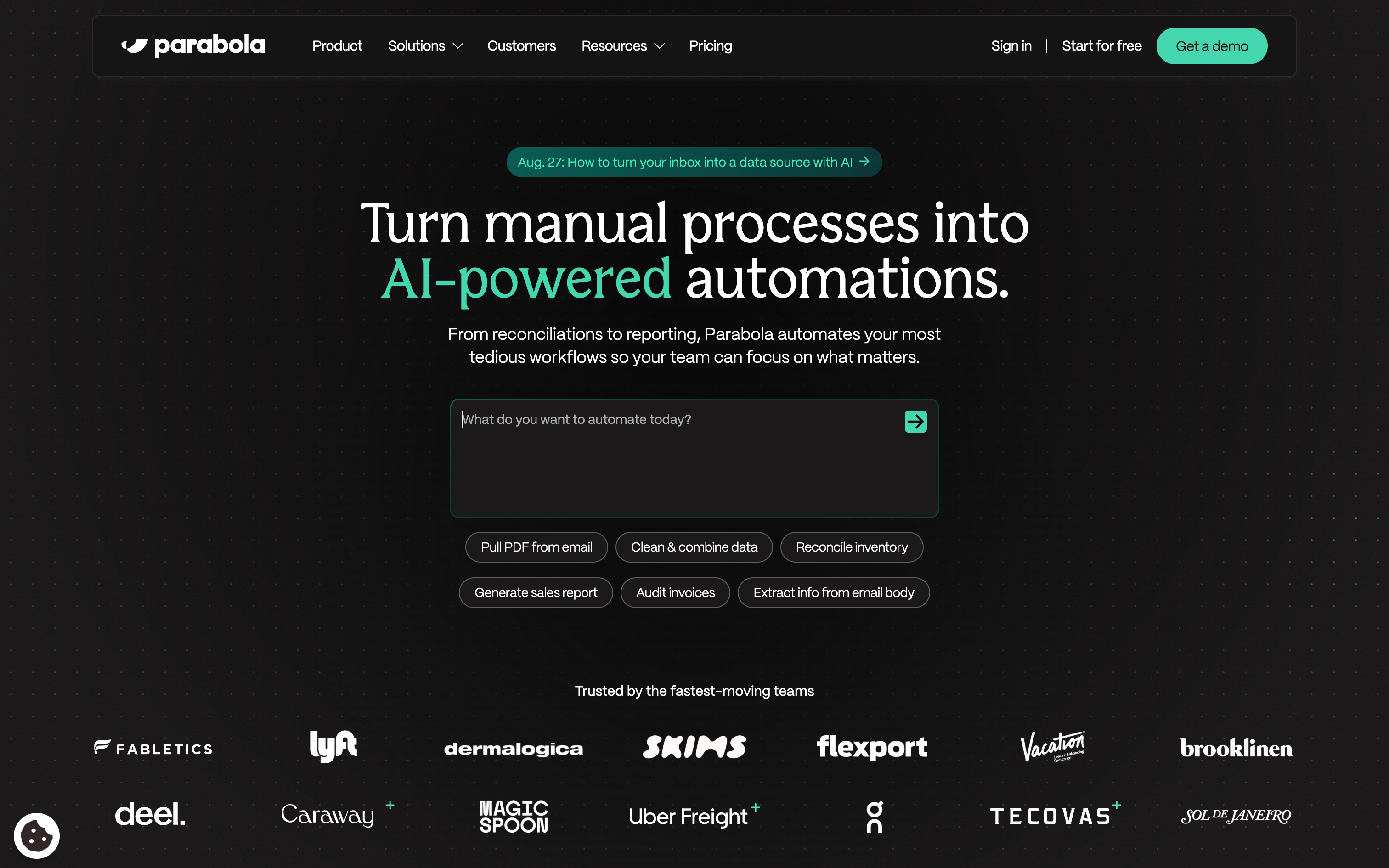
Parabola is a visual dataflow builder for ops teams. Great for CSVs, APIs, and batch transformations.
It’s best for rev-ops and marketing-ops teams preparing and moving data without writing code.
Score: 67
Standout strengths:
Excellent for ETL-style transformations Spreadsheet-friendly UI and scheduling Good for data cleansing and enrichment
Trade-offs:
Not optimized for event-driven automations Limited complex orchestration features
Pricing snapshot: Free tier; enterprise plans available.
Compared to n8n, Parabola is better for batch data prep. n8n is better for event-driven workflows, complex branching, and hosting flexibility.
13. Node-RED (open source)
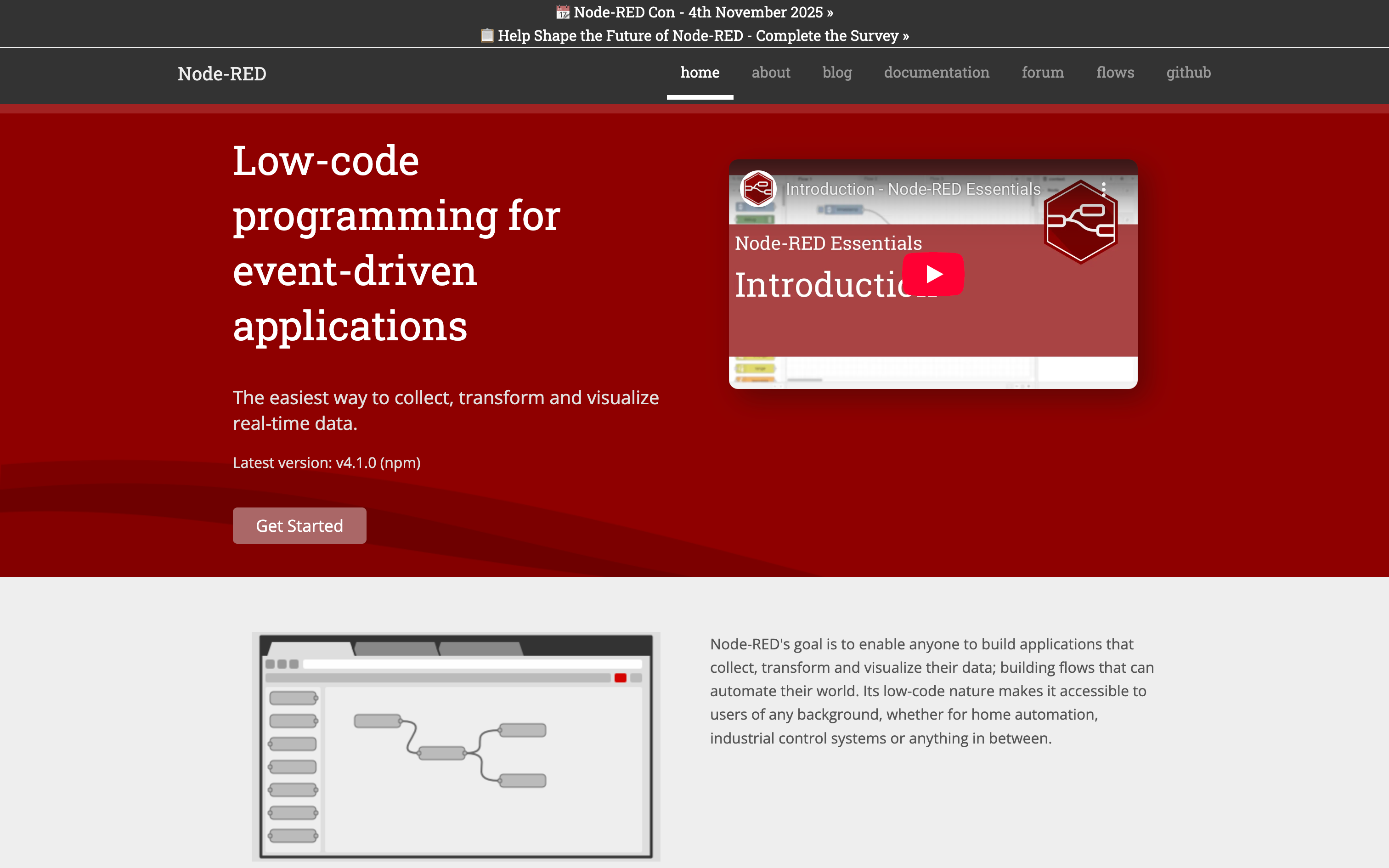
Node-RED is a flow-based programming platform for IoT, hardware, and web services built on Node.js.
It’s best for technical users integrating devices, MQTT, and APIs on-prem or edge.
Score: 65
Standout strengths:
Fully open source and self-hostable Strong IoT and protocol support Huge community of nodes
Trade-offs:
Developer-oriented; less turnkey SaaS focus Governance and scaling require engineering effort
Pricing snapshot: Free to use
Compared to n8n, Node-RED is just as visual and extensible. Node-RED excels in IoT/protocols, n8n focuses more on SaaS automation with modern workflow primitives.
14. Activepieces (open source)
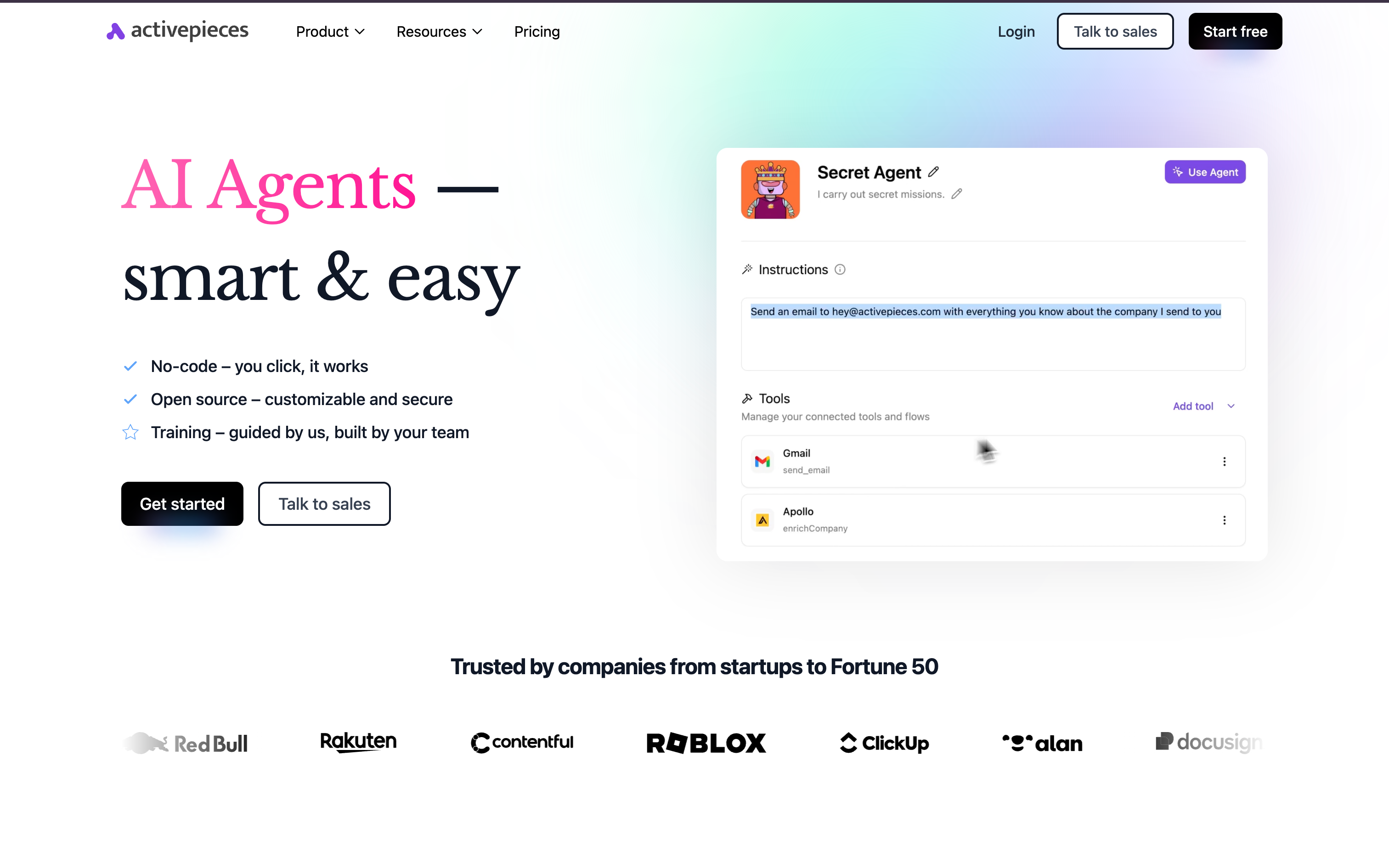
Activepieces is an open-source Zapier-like automation platform with a growing connector set. They offer both cloud and self-host options.
It’s best for teams wanting an open-source alternative with a simple UI.
Score: 63
Standout strengths:
Open-source core; self-host easily Simple, familiar workflow builder Affordable managed cloud
Trade-offs:
Smaller connector library than incumbents Advanced features still maturing
Pricing snapshot: Free tier; enterprise plans available.
Compared to n8n, Activepieces is simpler and closer to Zapier UX. n8n is more mature for complex logic and extensibility.
15. Flowise (open source)
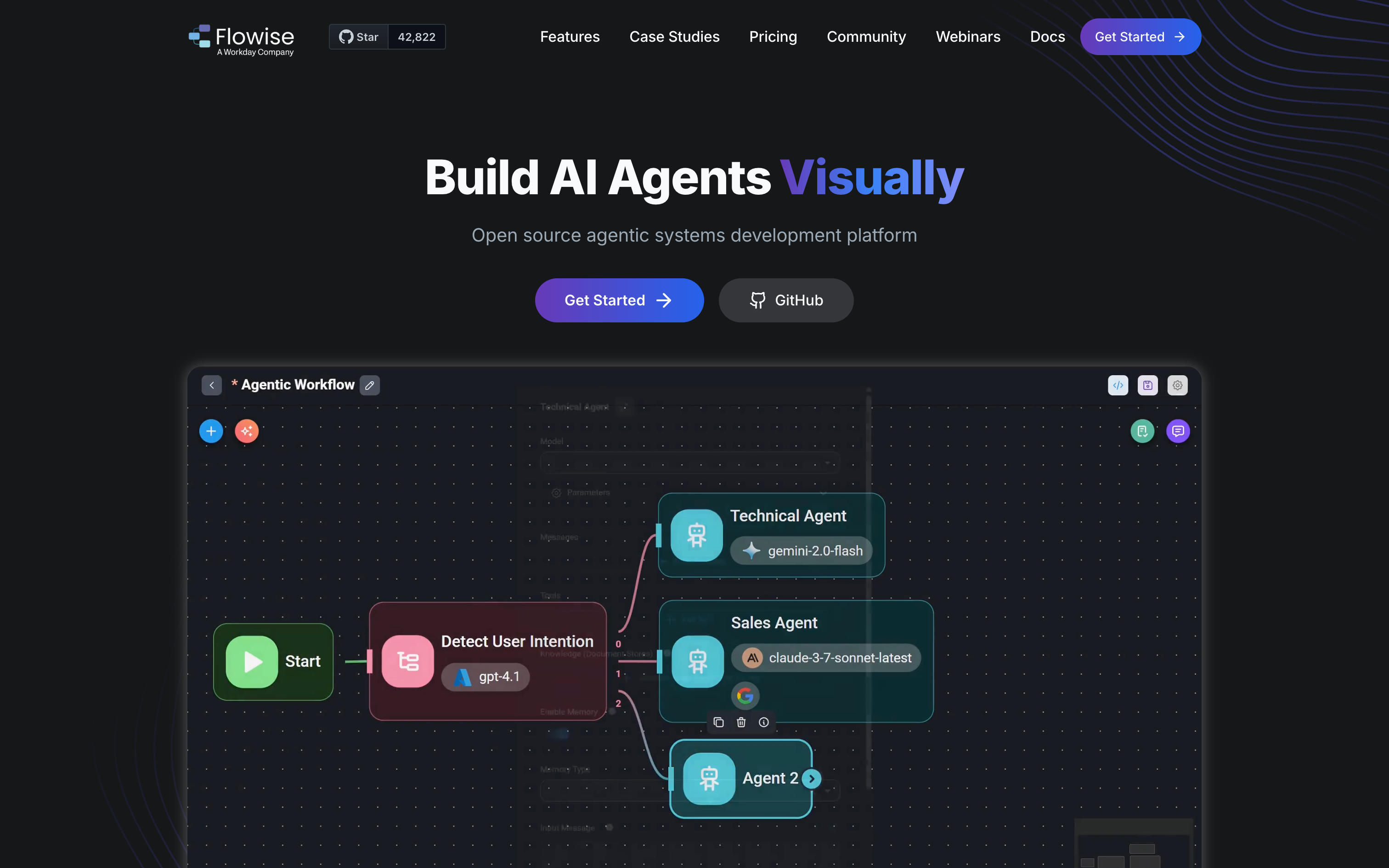
Flowise is an open-source visual builder for LLM chains and AI agents.
It’s best for teams experimenting with AI chatbots, retrieval workflows, and early-stage prototypes.
Score: 62
Standout strengths:
Intuitive drag-and-drop builder for chaining LLM steps Strong community momentum and frequent OSS contributions Great for prototyping RAG and conversational flows
Trade-offs:
Less suited for general automation (no broad SaaS connectors) Reliability and governance features are light compared to enterprise tools Best for experimentation, not full production scale
Pricing snapshot: Free tier; paid plans start at $35/mo, enterprise plans available.
Compared to n8n, Flowise is AI-only and excels at quick prototypes for LLM apps. n8n is broader and stronger for end-to-end SaaS automation and self-hosted governance.
Best n8n alternatives comparison table
Tool Best For Strengths Trade-offs Pricing Snapshot Compared to n8n Vellum Building AI agents & apps fast across technical and non-technical teams Prompt-to-build agents; AI Apps for sharing; visual builder & SDK (custom nodes in Python/TS, exportable code); native evals, versioning, tracing; flexible deployment (cloud/VPC/on-prem); strong support Fewer plug-and-play non-AI SaaS connectors than Zapier/Make Free tier; paid from $25/mo; enterprise plans available Similar developer depth, but dramatically faster for non-technical teams to prompt-build agents in minutes Make.com Ops teams needing multi-step logic and cost-effective, high-volume automations Advanced routing & mapping, strong error handling/replay, cost-effective at scale Steeper learning curve; UI can feel complex even for simple workflows Free tier; paid from $9/mo; enterprise plans available Both have complex UIs; Make has more off-the-shelf UI features and ops-based pricing; n8n better for self-hosting/custom nodes/developer control Pipedream Dev teams preferring code-level control and serverless runtimes First-class coding (JS/Python/TS), real-time event sources/webhooks, good secrets/logs/observability Less friendly for non-technical users; smaller prebuilt library Generous free tier; paid from $29/mo; usage-based; enterprise available More code-first; n8n blends no-code UI with extensibility and self-hosting Zapier Business users needing quick, simple non-technical automations Massive connector library & templates; approachable UI; reliable for lightweight event-driven tasks Limited complex logic/testing/versioning on lower tiers; costs rise with volume/premium apps; not ideal for AI workflows Free tier; paid from ~$20/mo; enterprise plans available Easier/faster start and breadth of connectors; n8n better for complex flows and self-hosted control Pabbly Connect SMBs wanting budget-friendly, no-code automations at scale Flat pricing; generous task limits; easy UI; 1,000+ connectors Smaller ecosystem vs Zapier/Make; fewer advanced DevOps features Free tier; paid from $14/mo; no enterprise plans Cheaper/easier for standard SaaS automations; n8n more extensible and self-hostable StackAI AI apps requiring enterprise security & governance AI routing & generation; KB ingestion; multiple deployment options (cloud/hybrid/on-prem) Overkill for small automations; enterprise-leaning pricing Free tier; enterprise pricing Deeper AI-native features; n8n broader and more cost-flexible Microsoft Power Automate Microsoft-centric orgs with compliance/governance needs Deep MS integration; approvals/governance; RPA for desktop/legacy Licensing complexity; non-MS connectors can lag Free trial; paid from $15/mo Best inside MS stack; n8n more open/extensible across diverse stacks Workato Enterprises with mission-critical automations Governance & security; rich connector catalog; strong lifecycle, testing, monitoring Premium pricing; overkill for SMBs Enterprise pricing only Enterprise rigor out-of-the-box; n8n can reach similar outcomes with self-hosting at lower software cost Tray.ai Mid-market/enterprise building API-heavy, data-rich workflows Advanced data transforms; solid debugging/logs; team controls Higher cost; learning curve for non-technical users Enterprise pricing only Enterprise polish/support; n8n lower cost if you manage infra yourself Celigo ERP/eCommerce-heavy stacks (NetSuite, marketplaces, 3PLs) Prebuilt ERP/commerce accelerators; strong mapping; strong NetSuite expertise Best value mainly if ERP is central; enterprise-lean pricing Free trial; enterprise pricing ERP accelerators; n8n more flexible/customizable with more DIY work SnapLogic Large orgs orchestrating apps, APIs, and data pipelines AI-assisted build; broad connectors (apps + data); governance/lifecycle controls Enterprise pricing; overhead for SMBs Enterprise pricing only Full iPaaS including data integration; n8n lighter and open-source-friendly Parabola Ops/RevOps/Marketing teams wrangling batch data Visual dataflows; great for CSVs/APIs; scheduling; strong for ETL-style transforms Not event-driven; limited complex orchestration Free tier; enterprise pricing available Better for batch data prep; n8n stronger for event-driven and complex branching Node-RED (OSS) Technical/IoT users wiring devices & protocols (MQTT, on-prem/edge) Fully open-source; strong IoT/protocol support; large community Developer-centric; governance/scaling are DIY Free, self-host Excels in IoT/protocols; n8n better for SaaS automation and modern workflow UX Activepieces (OSS) Teams wanting a simple open-source Zapier-like tool Open-source; self-hostable; clean UI; affordable cloud Smaller connector library; advanced features still maturing Free tier; paid from $25/mo; enterprise plans available Simpler/Zapier-like; n8n more mature for complex logic and extensibility Flowise (OSS) Teams prototyping LLMs/RAG and AI agents with an OSS stack Intuitive drag-and-drop for LLM chains; active community; great for quick prototypes Limited SaaS connectors; light on reliability/governance for full production scale Free tier; paid cloud from ~$35/mo AI-only prototyping; n8n broader for end-to-end SaaS automation and self-hosted governance
Honorable Mentions
While the following platforms have real strengths, they didn’t make the primary list because they serve narrower use cases, overlap with stronger picks, or lack the breadth to stand out as n8n alternatives for most readers.
Relay.app
No-code automation with human-in-the-loop approvals. Clever for workflows that require manual steps, but limited in connector breadth and advanced logic. In practice, larger tools (Zapier, Make, Power Automate) cover more ground while still offering approval steps.
SyncSpider
Ecommerce-focused automation for catalogs, orders, and channels, and a good choice if you live in Shopify, marketplaces, and ERP systems. Celigo provides deeper ERP coverage with more enterprise polish, so SyncSpider feels niche by comparison.
Albato
Affordable SMB automation platform with white-label options. Pricing is attractive, especially in some regional markets, but its ecosystem is smaller and less reliable than Pabbly Connect , which better represents the budget-friendly segment.
Huginn
DIY, open-source “agents” framework for scraping and event-driven tasks. Huginn is highly customizable and totally free, but the dated UI, steeper setup, and smaller community make Activepieces and Node-RED more practical open-source picks today.
Bardeen
Browser-native automation with AI “playbooks” for scraping pages, moving data between tabs, and speeding up personal workflows (prospecting, research, admin). Granular for individuals and GTM teams living in the browser, but it didn’t make the main list due to a narrower scope, lighter governance, and limited backend connectors compared to full connecter and workflow platforms.
How to choose n8n alternatives?
Comparing in feature grids and pricing tiers can get confusing very quickly. To keep your evaluation focused, use this checklist of what actually matters for the 14 shortlisted platforms.
Factor What to Consider Primary Use Case Match the tool to your goal (quick no-code wins, developer workflows, AI apps, ERP/e-commerce, or data prep). Team Skill Level If you want business and eng to build together, go with a tool that offers good mix low-code options with developer level functionality. AI Readiness Look for native AI steps/agents, evals/observability, and flexible model support (OpenAI/Azure/Anthropic, etc.). Integrations & Ecosystem Check connector depth for your core stack (CRM, CS tools, data warehouse) and quality of webhooks/APIs. Logic & Reliability Branching/loops, error handling, retries, versioning, and clear run logs for debugging at speed. Scalability & Performance Concurrency, throughput, rate-limit handling, and how costs/limits behave as volume grows. Deployment & Data Control Decide between cloud vs. self-host/VPC; confirm SSO, RBAC, audit logs, secrets management, and data residency. Governance & Compliance Need SOC 2/HIPAA/GDPR? Shortlist platforms with mature governance for enterprise requirements. Usability & Onboarding Templates, guided tours, clean builders, and collaboration so new users ramp quickly. Total Cost of Ownership Look beyond sticker price: usage limits, AI token costs, overage risk, and ops effort if self-hosting. Support & Community SLAs, live support, partner ecosystem, active community with real examples, or white-glove support to help you build and execute. Lock-in & Extensibility Availability of HTTP/GraphQL steps, custom connectors/SDKs, and export/version control to avoid lock-in.
Use this table to narrow to 2-3 candidates that fit your team, stack, and risk profile. Next, trial those against one or two of your real workflows.
Tips for selecting an AI automation platform
Prototype with two real workflows (before you buy)
Rebuild a simple “event → transform → notify” flow and an AI-enriched flow (e.g., classify/summarize → write to CRM). Time how long it takes to ship, fix, and iterate.
Price at your target volume, not the free tier
Model 3-6 months out. Include task/operation caps, overage rates, AI token costs, and background steps. Ask for a sample invoice at your projected usage.
Insist on AI lifecycle features
Look for native evals, prompt/version control, tracing, guardrails, and easy swaps between model providers (OpenAI/Azure/Anthropic, OSS). API calls alone aren’t enough at scale.
Check integration depth, logo count
Verify the exact triggers/actions you need (e.g., search vs. upsert vs. bulk operations), pagination handling, and whether webhooks are first-class.
Stress-test failure modes
Simulate 429s and API timeouts. Confirm retries, backoff, idempotency, partial-failure handling, replay, and dead-letter queues. Good logs should make root-cause obvious.
Plan for scale and rate limits on day one
Evaluate concurrency controls, parallel runs, queueing, and how the platform behaves when you burst. Make sure you can throttle per-connector.
Verify security & governance early
SSO, RBAC, audit logs, secrets management, and data residency/compliance (SOC 2/HIPAA/GDPR). If you need VPC/on-prem, check what “self-hosted” actually covers.
Ensure collaboration & change control
Templates, environments (dev/stage/prod), reviews, and rollback/version pinning. You want safe iteration without breaking prod.
Avoid lock-in
Confirm HTTP/GraphQL steps, custom connectors/SDKs, exportable flows, and Git integration. You should be able to leave, or extend, without rewriting everything.
Validate support & community
Test response times during trial, skim docs/changelogs, and check for real examples/recipes. For enterprise, ask about SLAs and incident communication.
Wondering what successful AI implementation could look like in your org? The 6 Stages for Successful AI Implementation will help you understand and set the right targets for what successful AI implementation will be for you.
Quickly chosen alternatives
Developer-first and AI-heavy workflows: Pipedream, StackAI, Node-RED. Non-technical teams, quick wins: Zapier, Pabbly Connect, Make. Visual builders with branching logic: Make, Tray.ai, n8n. Enterprise iPaaS: Workato, SnapLogic, Celigo. Open source and self-hosted: n8n, Node-RED, Activepieces. Personal AI for individual work (different category): Vellum.
Why evaluating alternatives matters
Choosing an automation platform isn’t about picking a name off a list, this decision is a long-term bet on how your org will scale with AI. Whether that be scaling team function or revenue growth, putting each option through a rigorous evaluation is a must. The real differences and ability in help you scale only show up when you test real workflows, model costs at scale, and push the system under stress.
A careful trial will reveal whether a tool’s pricing holds up, whether its AI features go beyond just API calls, and whether it can recover gracefully from errors. It’s also the only way to confirm the depth of its integrations and the strength of its governance.
If a platform clears those hurdles with your actual use cases, then you’re picking a solution that is so much more than a tool, you’re investing in a reliable automation backbone that will serve your teams well as the orgs needs grow.
Why choose Vellum
Vellum is the personal AI assistant for the work n8n was never designed to automate. n8n is great at wiring deterministic, multi-step SaaS workflows for a team. Vellum is what each individual uses for judgment-heavy daily work: triaging email, prepping for meetings, drafting follow-ups, running research, and keeping track of every loop they're holding open. It runs as a native Mac app on your machine or in Vellum Cloud, with iOS, web app, voice, email, Telegram, and Slack surfaces that share one memory.
What makes Vellum different
- Persistent memory: every interaction across every surface compounds into a real model of you, your work, and your context.
- Seven surfaces, one memory: Mac, iOS, web app, voice, email, Telegram, and Slack stay in sync. Pick up on phone what you started on desktop.
- Proactivity engine: hourly check-ins and background task execution. Vellum reaches out when there's something worth surfacing instead of waiting to be asked.
- Skills system: install community-built capabilities or write your own in Python. Capabilities compound.
- Open source under MIT. Run it locally on your Mac with credential isolation, or use Vellum Cloud for persistent background operation.
- Native MCP support: bring your own tools and models. Pro includes platform-provided custom LLM credentials so you don't have to manage your own keys.
- Vellum never has access to your data on any deployment path.
Extra Resources
Looking for other AI platforms and tooling? Here’s some extra resources to help expedite your solution evaluation and comparison journey!
2026 Guide to AI Agent Workflows →
Ultimate LLM Agent Build Guide →
Understanding agentic behavior in production →
How the best teams ship AI solutions →
FAQs
1) What is the best n8n alternative for non-technical users?
Make and Zapier are the most approachable for non-technical builders thanks to clean visual canvases and large connector catalogs. If what you actually need is a personal AI for individual work rather than team SaaS plumbing, Vellum is a different category.
2) Which n8n alternative offers the best value for advanced logic?
Pipedream and n8n itself give engineers the deepest control over branching and data transforms, with code steps in JavaScript, Python, and TypeScript.
3) What is the cheapest n8n alternative for small businesses?
Pabbly Connect is the most budget-friendly option, offering flat-rate pricing with generous task limits.
4) What’s the best developer-first alternative to n8n?
Pipedream is built for developers, with code steps in JavaScript, Python, and TypeScript plus a serverless runtime.
5) Which n8n alternative is best for AI workflows?
Make ships AI actions like summarize and classify that plug directly into workflows. Wrk offers managed AI workflow delivery if you'd rather not build it in-house.
6) What n8n alternative supports prompt testing and evaluation?
Prompt testing and evaluation live in a different category from workflow automation. Langfuse and LangSmith are the leading LLMOps tools for that work.
7) Which n8n alternative is best for Microsoft users?
Microsoft Power Automate integrates deeply with Microsoft 365, Teams, and Dynamics while adding RPA capabilities.
8) What’s the best enterprise-grade alternative to n8n?
Workato and SnapLogic are enterprise iPaaS leaders, offering strong governance, SLAs, and compliance features.
9) What n8n alternative is best for ERP and ecommerce workflows?
Celigo is purpose-built for ERP and ecommerce stacks, with prebuilt flows for NetSuite, marketplaces, and 3PLs.
10) Which n8n alternative is best for AI observability and monitoring?
AI observability also belongs to the LLMOps category, not workflow automation. Langfuse gives you traces, evaluations, and prompt management for production AI apps.
11) What open-source alternatives to n8n are available?
Activepieces and Node-RED are the leading open-source options, offering full control through self-hosting.
12) Which n8n alternative is best for batch data processing?
Make and Tray.ai are strong picks for batch data work like CSV cleanup, transforms, and scheduled syncs across CRMs and warehouses.
13) What n8n alternative helps manage the full AI lifecycle?
Managing the full AI app lifecycle, prompt versioning, evaluations, deploys, and monitoring, is the LLMOps category. Langfuse and LangSmith are the right starting points; n8n alternatives sit at the workflow layer, not the LLMOps layer.