Quick overview
This guide breaks down the top 13 AI agent builder platforms of 2026, how to evaluate them, and where each fits in enterprise adoption. We compared and evaluated these solutions to make it easy to find your fit. We also include the open-source personal AI assistant category, increasingly relevant for individual operators inside the enterprise who want their own working assistant rather than a slice of an org-wide multi-agent stack.
Top 6 agent builder shortlist
If you only want the contenders that matter most for enterprise teams in 2026, here’s the shortlist:
- Vellum: Best for individual operators inside the enterprise wanting a personal AI assistant with persistent memory and native surfaces.
- Vertex AI Agent Builder (Google Cloud): Best for GCP shops needing RAG, memory, and compliance.
- LangChain: Best for developer-led teams that want maximum flexibility and ecosystem depth.
- AutoGen: Best for research and multi-agent orchestration with self-reflection loops.
- CrewAI: Best for visually designing role-based agent teams without heavy code. Dify: Best for low-code workflow design with strong RAG and dataset management.
- OpenAI Agents (SDK): Best for fast prototyping inside the OpenAI ecosystem with built-in guardrails.
I’ve only seen enterprises find org wide success with AI agents when enabled to maintain control and flexibility through the platform to keep agents adaptive to their solution. The right platform will exponentially cut the time to develop, build, and iterate AI agents for internal and external use, allowing AI initiatives to produce real value and ROI quickly.
With MIT finding that 95% of genAI pilots fail to reach production, the path forward in 2026 is choosing a platform that will be your strategic partner in AI agent building [1] . A deeply customizable platform that supports users by enabling easy building and collaborative environments is an ideal solution for this approach.
If you are looking to bring your enterprise into the modern AI world, choosing your AI agent builder solution is a pivotal step to either enable success, or if chosen poorly, become another failed initiative. We put this guide together to help you make sure the ladder doesn’t happen.
What Is an AI agent builder?
An AI agent builder is a platform or framework for designing, deploying, and managing AI agents. They are systems powered by LLMs that can reason, use tools, and act across workflows.
Here are top three platform functions to keep in mind as you evaluate AI agent builders:
- Low-code & collaboration features: Makes it easy for non-technical teammates to sketch, test, and adjust workflows without needing to write full code.
- Deep Developer functionality: Gives engineers the ability to extend, customize, and harden workflows with SDKs, custom nodes, and integrations.
- Governance: Provides version control, permissions, audit logs, and monitoring so organizations can trust and scale their workflows safely.
Why use an AI agent builder?
Capgemini Research found that AI agents have the potential to generate $450 billion in economic value by 2028, yet 2025 showed only 2% of organizations have deployed AI agents at scale with only 12% at partial scale [2] .
Enterprises leaving this massive potential on the table struggling to easily and reliably build AI agent that get into production without it breaking, drifting, or losing stakeholder trust. That’s where agent builders come in as the solution to securely build and put AI agents into reliable use.
They provide the scaffolding needed to turn promising pilots into reliable systems:
- Speed up delivery: Templates, visual editors, and pre-built connectors let teams move from idea to working agent in days, not months.
- Reduce risk: Built-in evaluations, monitoring, and version control mean you catch regressions before users do.
- Enable collaboration: Non-technical teammates can shape workflows while engineers extend and harden them, all in the same environment.
- Scale with confidence: Governance features like RBAC, audit logs, and environment separation make it possible to expand usage safely across departments.
What makes an ideal AI agent builder?
The ideal platform will be unique to your business but should balance speed, reliability, and governance in a way that works for enterprise teams.
In practice, your ideal builder is one that lets your non-technical teams move fast without creating messes engineers later have to clean up, while giving engineering the depth they need to harden, monitor, and scale AI agents.
Based on what we’ve seen across the market, here’s what sets a true leader apart:
- Bi-directional syncing: Visual interfaces for PMs and SMEs, plus SDKs/APIs for engineers.
- Evaluation and versioning capabilities: Every release can be tested, compared, and rolled back safely.
- End-to-end observability: Traces, dashboards, and logs that show how agents behave in production.
- Governance at scale: RBAC, audit trails, and environment separation that meet enterprise compliance standards.
- AI-native primitives: Retrieval, semantic routing, memory, and deep orchestration customizability.
- Flexible deployment: Options for cloud, VPC, or on-prem, so sensitive data never leaves your control.
- Healthy ecosystem: Connectors, integrations, and a vendor roadmap that signal long-term stability.
How to evaluate AI agent builder platforms?
Forget mindlessly clicking from agent builder site to site and comparing spec sheets. Here’s an evaluation framework that will ensure you make a sound, long-term choice tailored to your use case:
Use this checklist to score each platform on every dimension. 1 = weak fit, 5 = strong fit.
- Total cost of ownership: What costs appear at scale (context, memory, tool calls), and what limits hit on runs, users, or connectors? Avoids tools that start cheap but get expensive as usage grows.
- Time to value: How fast can a non-technical user ship a useful agent, and how long until stable production? Shortens pilot cycles and accelerates ROI.
- Fit for your builders: Can PMs and SMEs build visually, and do engineers get SDKs, scripting, custom nodes, and CI hooks? Matches the platform to your actual team skills and workflow.
- AI-native capabilities: Are retrieval, memory, semantic routing, tool use, and multi-agent orchestration first-class? Determines whether it can power real agent use cases without brittle glue code.
- Testing and versioning: Can you run evals, compare versions, promote safely, and roll back cleanly? Prevents regressions and supports evidence-based releases.
- Observability: Do you get traces, logs, and performance metrics at node, agent, and workflow levels? Makes incidents diagnosable and improvements measurable.
- Governance and security: RBAC, SSO/SCIM, audit logs, approvals, environment separation, and policy guardrails? Keeps agents compliant and production-safe.
- Data control and lock-in: Can you export flows and code, run in VPC or on-prem, and move artifacts and eval sets between platforms? Protects against vendor lock-in and eases migration.
- Ecosystem and integrations: Prebuilt connectors, marketplace, tool partnerships, and shipping velocity? Reduces custom work and widens coverage.
- Deployment flexibility: Cloud, VPC, or on-prem options? Private networking and regional data residency? Aligns with IT policies and data privacy constraints.
- Performance and scalability: Latency benchmarks, throughput, concurrency limits, caching, and cost controls at scale? Ensures agents remain fast and affordable as adoption grows.
- Change management: Reviews, approvals, release gates, and safe promotion across environments? Prevents shadow workflows and keeps teams aligned.
- Support and community: SLAs, live support, solution architects, and an active user or OSS community? Determines how quickly you unblock issues and adopt best practices.
The top 13 AI agent builder platforms in 2026
1. Vellum, open-source personal AI assistant for individual operators
Quick overview
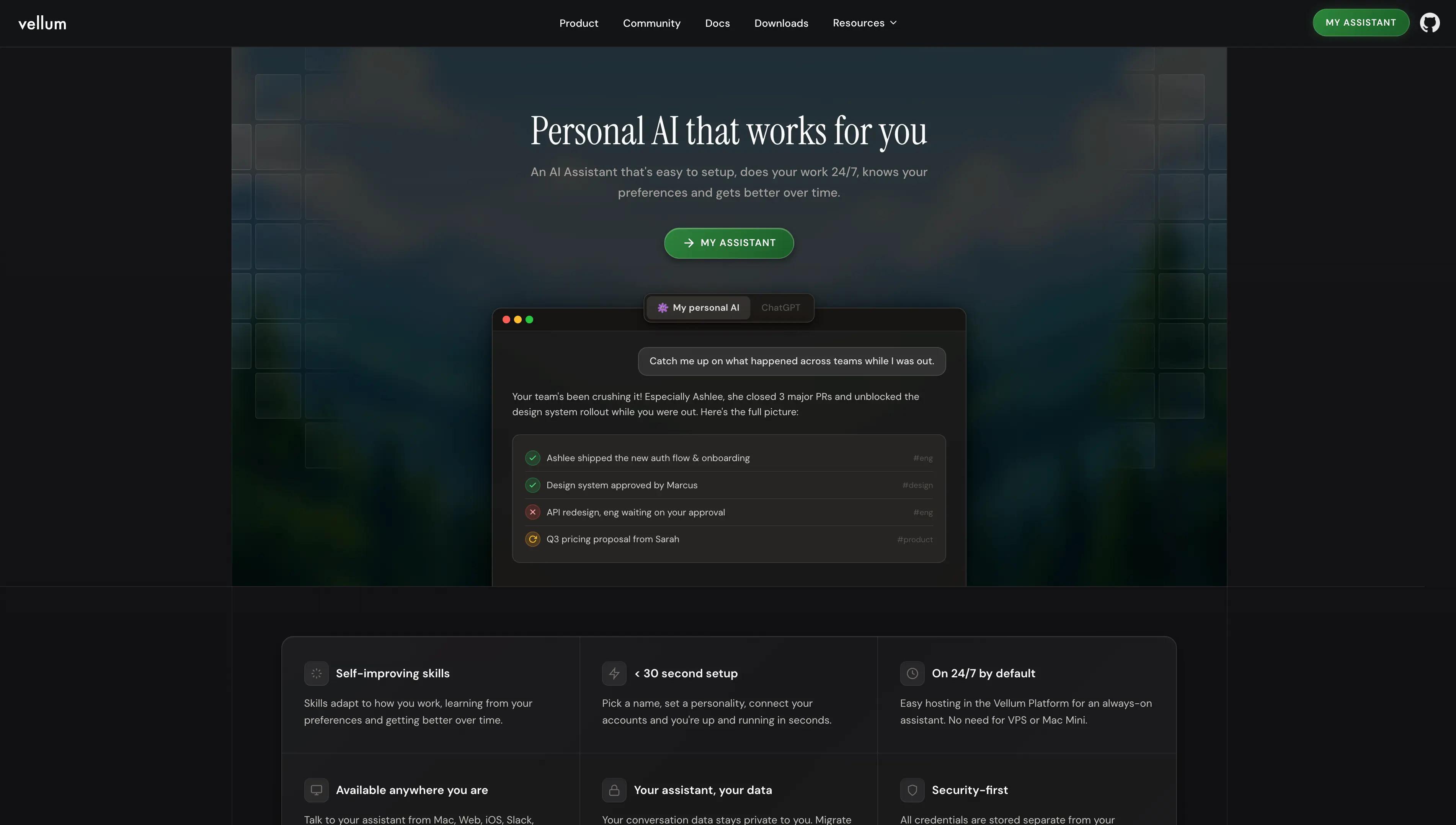
Vellum is an open-source personal AI assistant that runs as a native Mac app on your machine or in Vellum Cloud, with iOS, web app, voice, email, Telegram, and Slack surfaces that share one memory. Enterprises evaluating agent builders for org-wide multi-agent stacks should pair this category with a personal-assistant deployment per operator, analysts, ops leads, and engineers shipping their own assistants with skills written in Python or TypeScript. Vellum never has access to your data on any deployment path.
Best for: Individual operators inside the enterprise who want a working assistant on day one with persistent memory across seven native surfaces.
Pros
Open source with on-device option Working assistant on day one Persistent memory shared across seven native surfaces Skill system in Python or TypeScript
Cons
- Brief learning curve as your assistant builds context on you.
Pricing
Free Base plan. Pro from $50/mo with pay-as-you-go credits, configurable compute and storage, and your assistant's own email and subdomain.
2. Vertex AI Agent Builder (Google Cloud)
Quick Overview
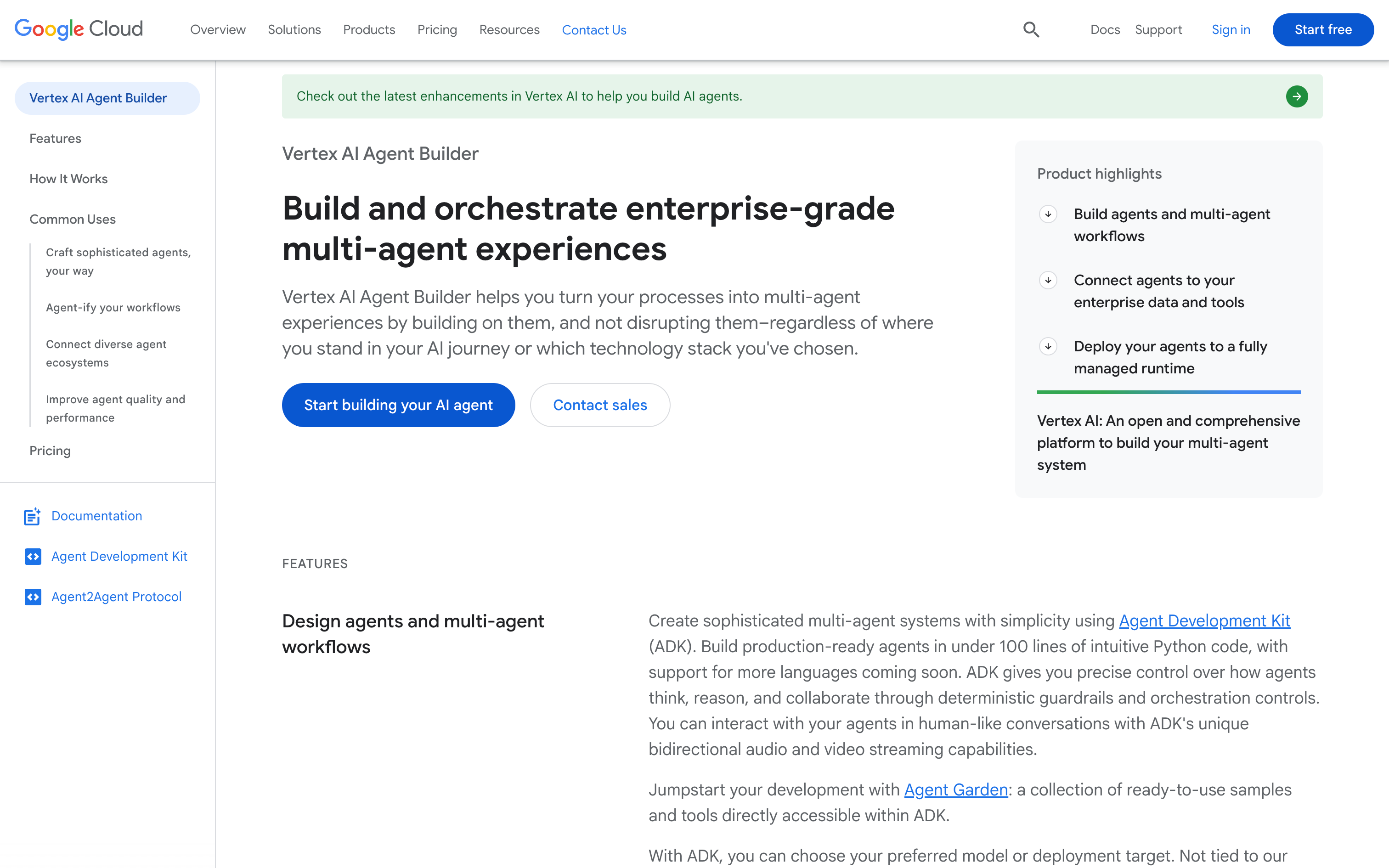
Google’s managed agent builder with RAG, memory, and governance baked in. Strong fit for enterprises already committed to GCP.
Best For
Cloud-first enterprises prioritizing compliance and integration with Google ecosystem.
Pros
Memory bank and session support Managed runtime with enterprise SLAs Pre-built agent templates Deep integration with Google stack
Cons
Less flexible for non-Google environments Pricing complexity at scale
Pricing
Usage-based (compute, storage, API).
3. LangChain
Quick Overview
The most popular open-source framework for agent building, with an enormous ecosystem.
Best For
Developer-heavy teams that want to experiment and customize.
Pros
Modular architecture and plugins Huge community and ecosystem Flexible memory and RAG options Works with all major LLMs
Cons
DIY governance and observability Very steep learning curve for non-technical and technical users
Pricing
Open source; enterprise support available.
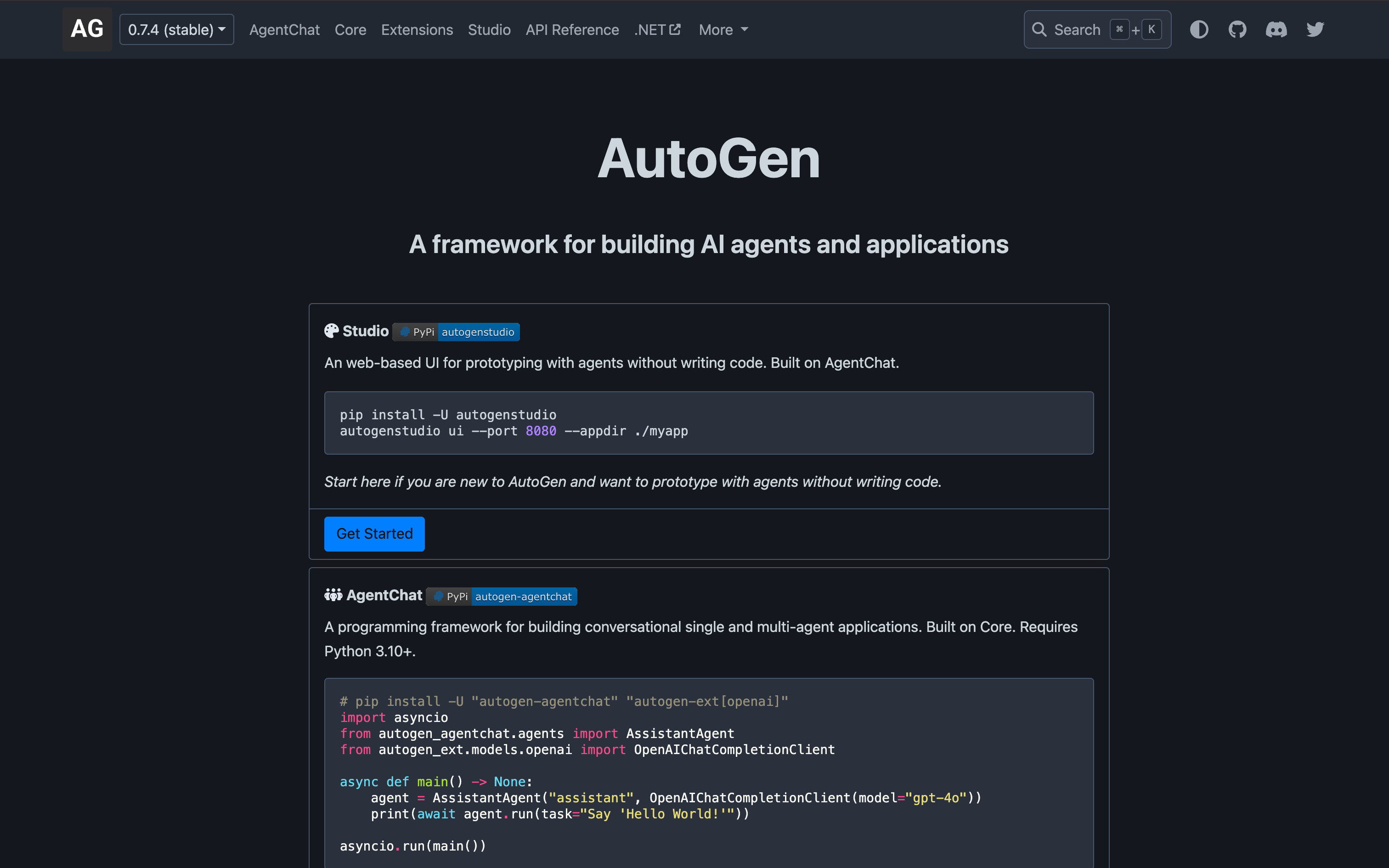
4. AutoGen
Quick Overview
A framework focused on multi-agent collaboration and autonomous workflows.
Best For
Teams that want structured agent collaboration (e.g. research agents + reviewer agents).
Pros
Multi-agent orchestration Support for higher autonomy Open-source flexibility
Cons
Requires significant engineering investment Governance features are thin out-of-box
Pricing
Open source; paid support options.
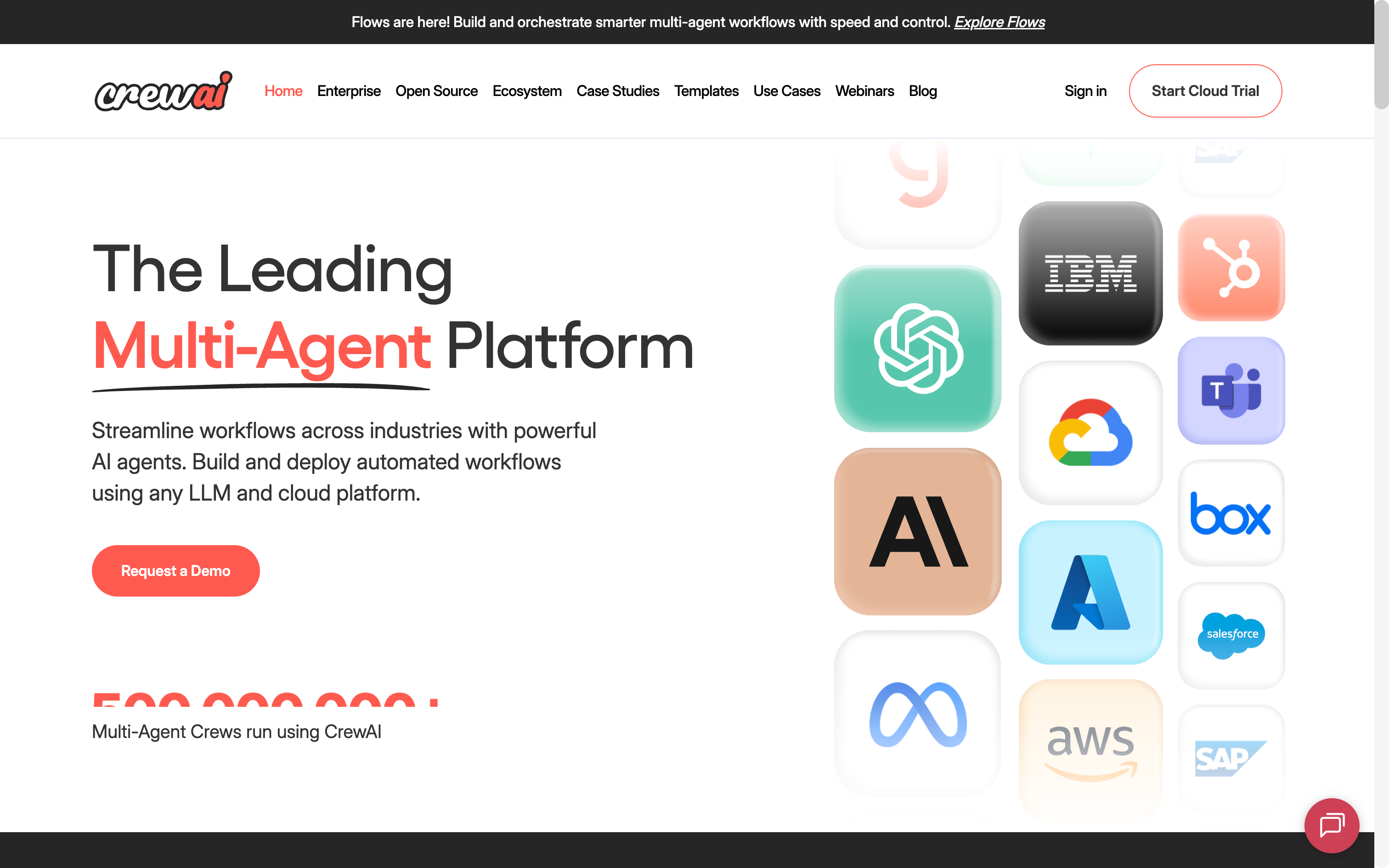
5. CrewAI
Quick Overview
A builder that leans into the “team of agents” metaphor with role specialization.
Best For
Organizations that want to simulate cross-functional teams via agents.
Pros
Role-based agent specialization Collaborative workflows Visual design layer
Cons
Early-stage ecosystem Scaling requires extra customization
Pricing
Freemium; enterprise contracts available.
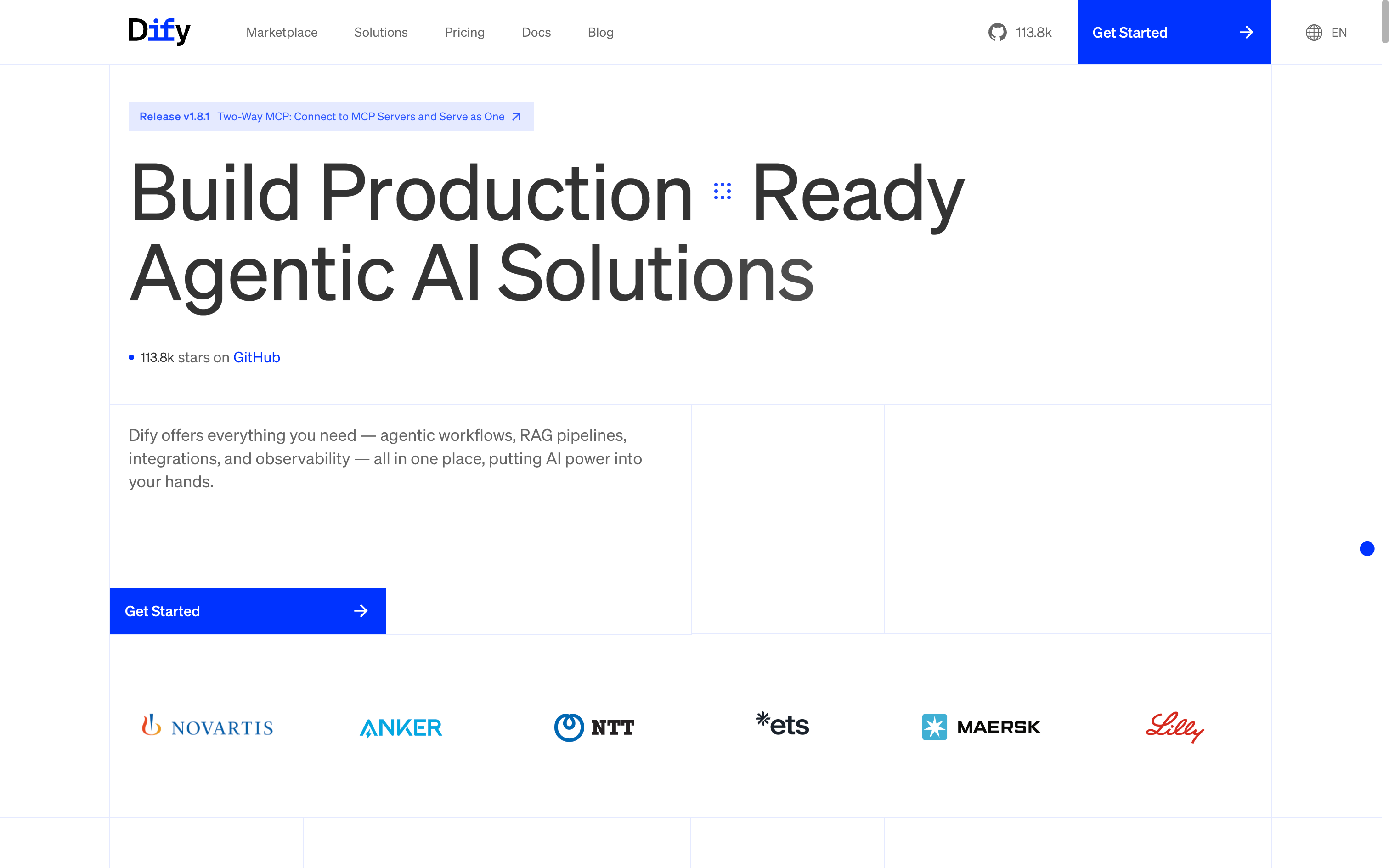
6. Dify
Quick Overview
A low-code/no-code agent builder with a growing enterprise footprint.
Best For
Teams that want to move fast on simple AI workflows with minimal coding.
Pros
Low-code interface Model switching made easy Pre-built connectors
Cons
Limited depth for advanced devs Governance less strong than enterprise-first tools
Pricing
Freemium; enterprise tiers available.
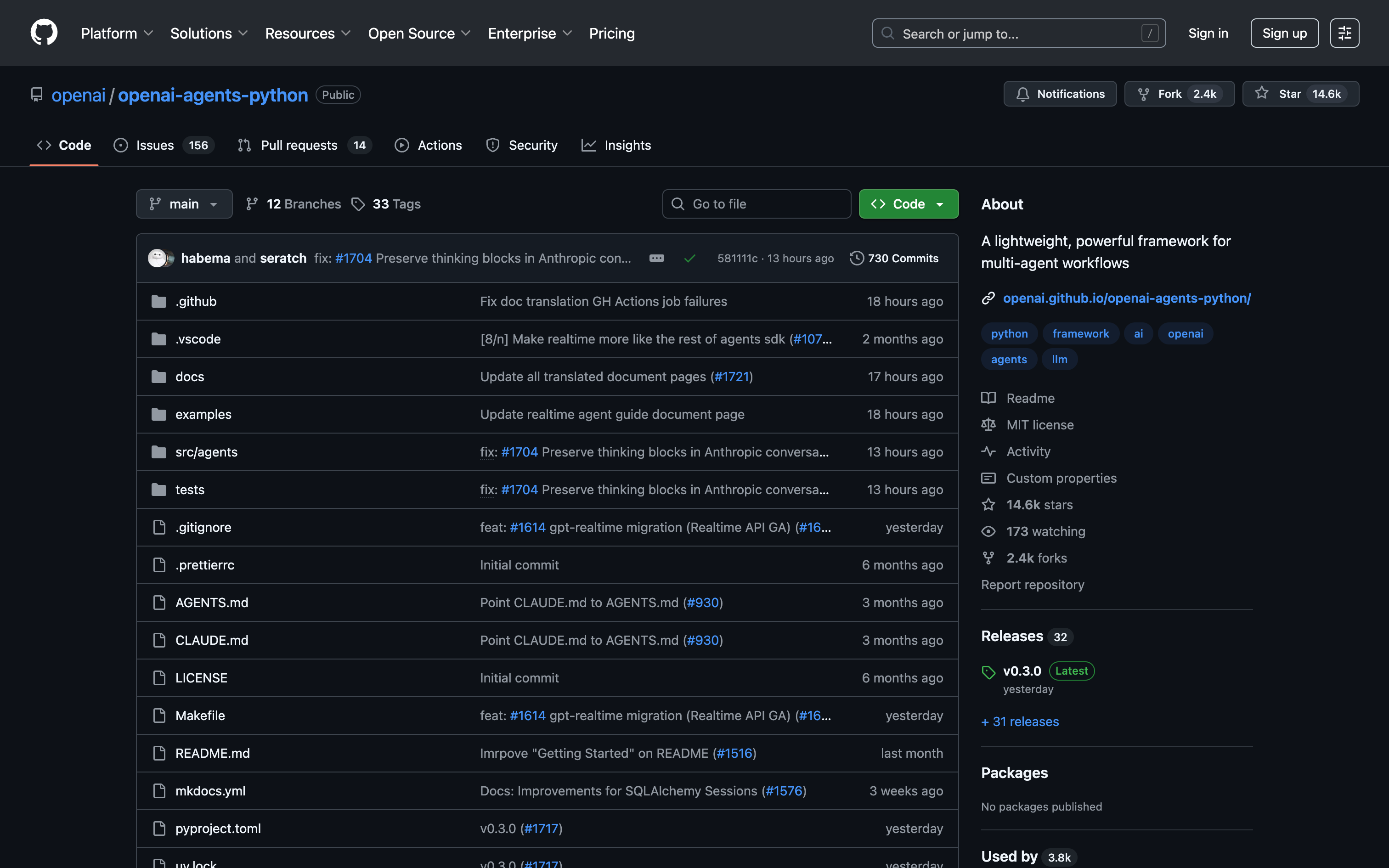
7. OpenAI Agents (SDK)
Quick Overview
OpenAI’s SDK for building agents directly on GPT models.
Best For
Teams that want to stay close to OpenAI’s ecosystem with tool use and guardrails.
Pros
Tight integration with GPT Tool calling & function support Strong model quality
Cons
Missing enterprise-grade governance Vendor lock-in risk
Pricing
Usage-based API pricing.
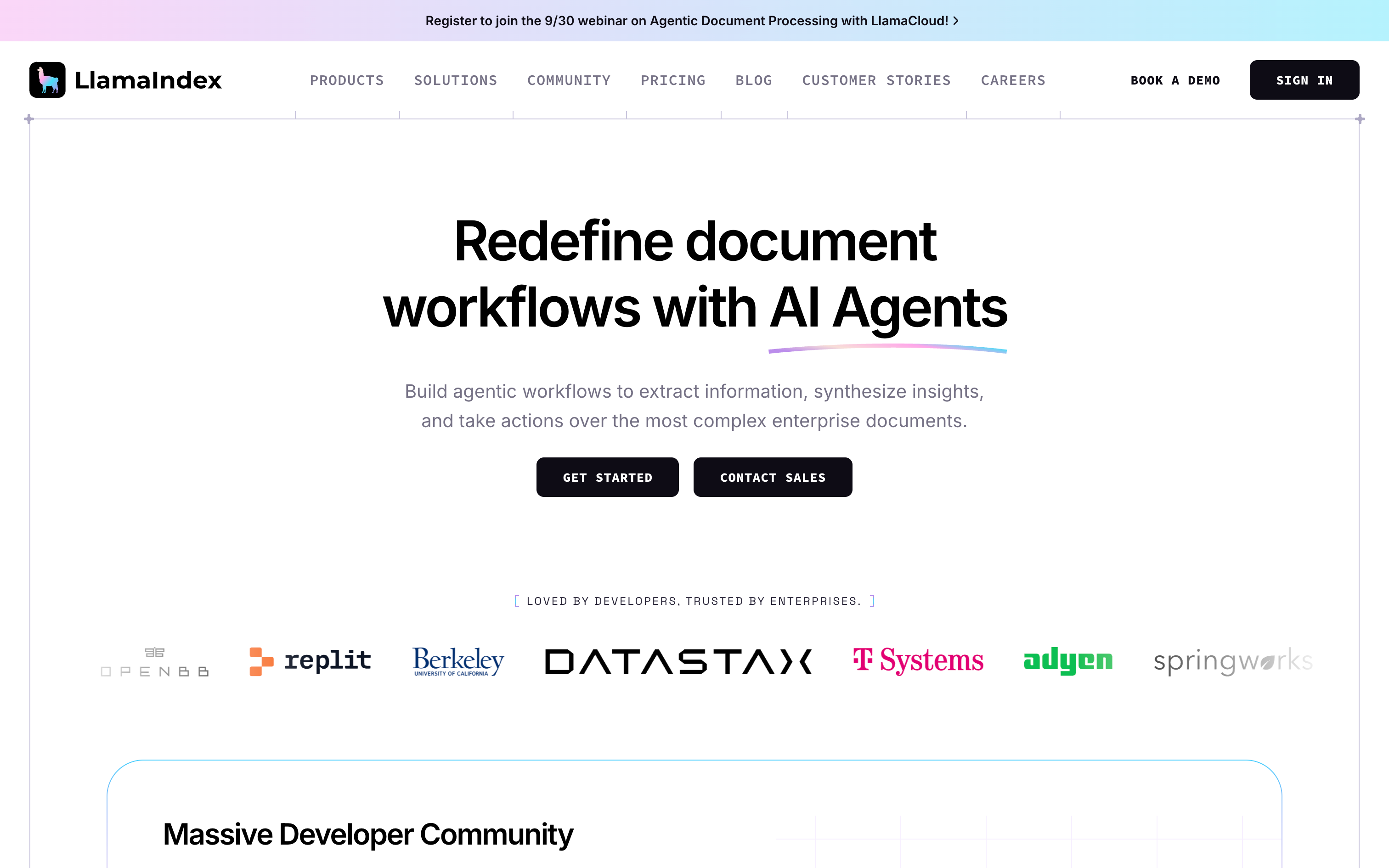
8. LlamaIndex
Quick Overview
Frameworks specialized in retrieval-augmented workflows.
Best For
Enterprises with large knowledge bases or compliance-heavy document workloads.
Pros
Strong RAG pipelines Connector ecosystem Active OSS community
Cons
Not full agent orchestration Monitoring is DIY
Pricing
Open source; paid support tiers.
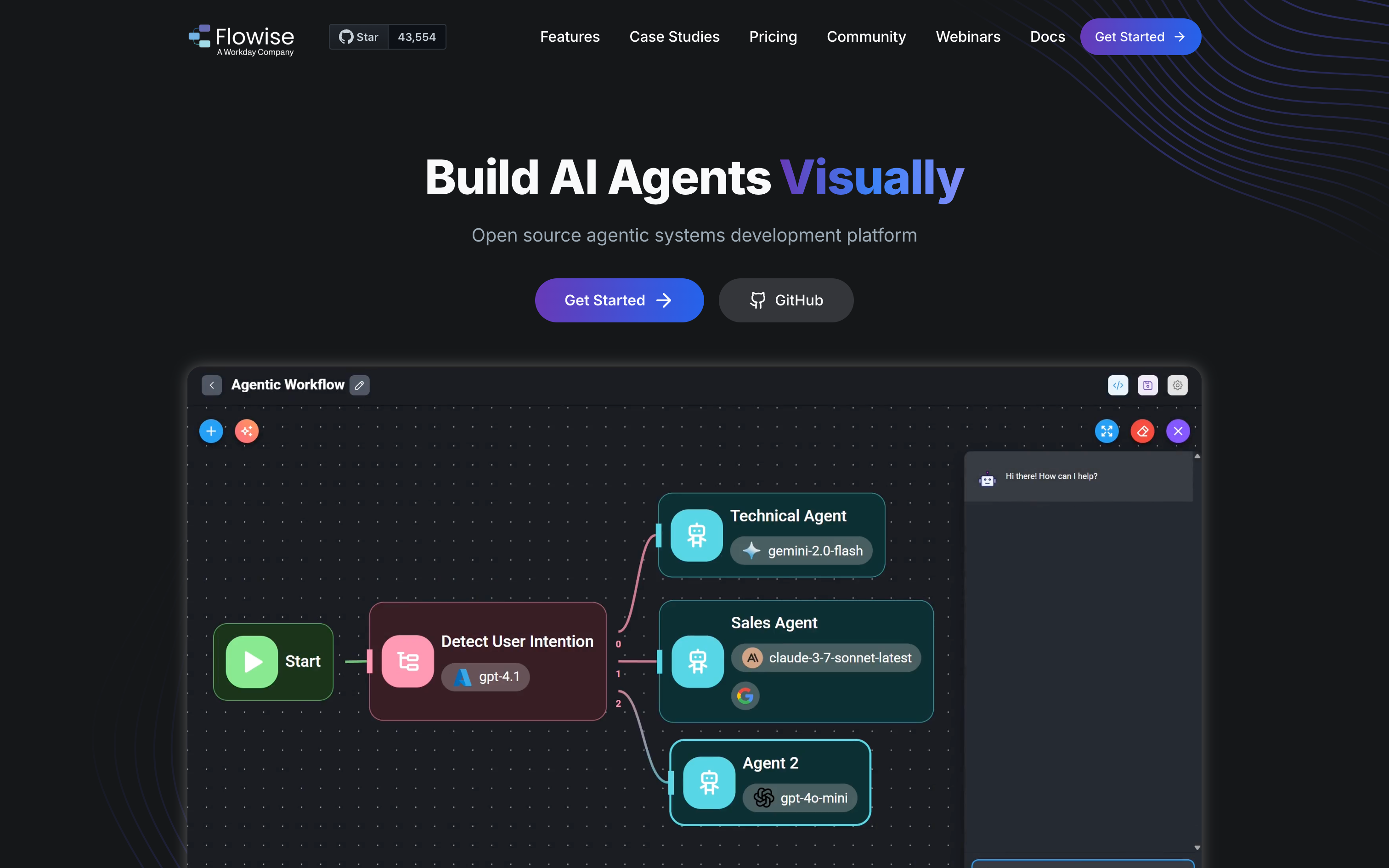
9. Flowise AI
Quick Overview
A visual node-based builder popular with smaller teams.
Best For
Rapid prototyping with non-technical users.
Pros
Easy onboarding Visual flows Growing template library
Cons
Shallow governance Limited scaling options
Pricing
Free + paid plans.
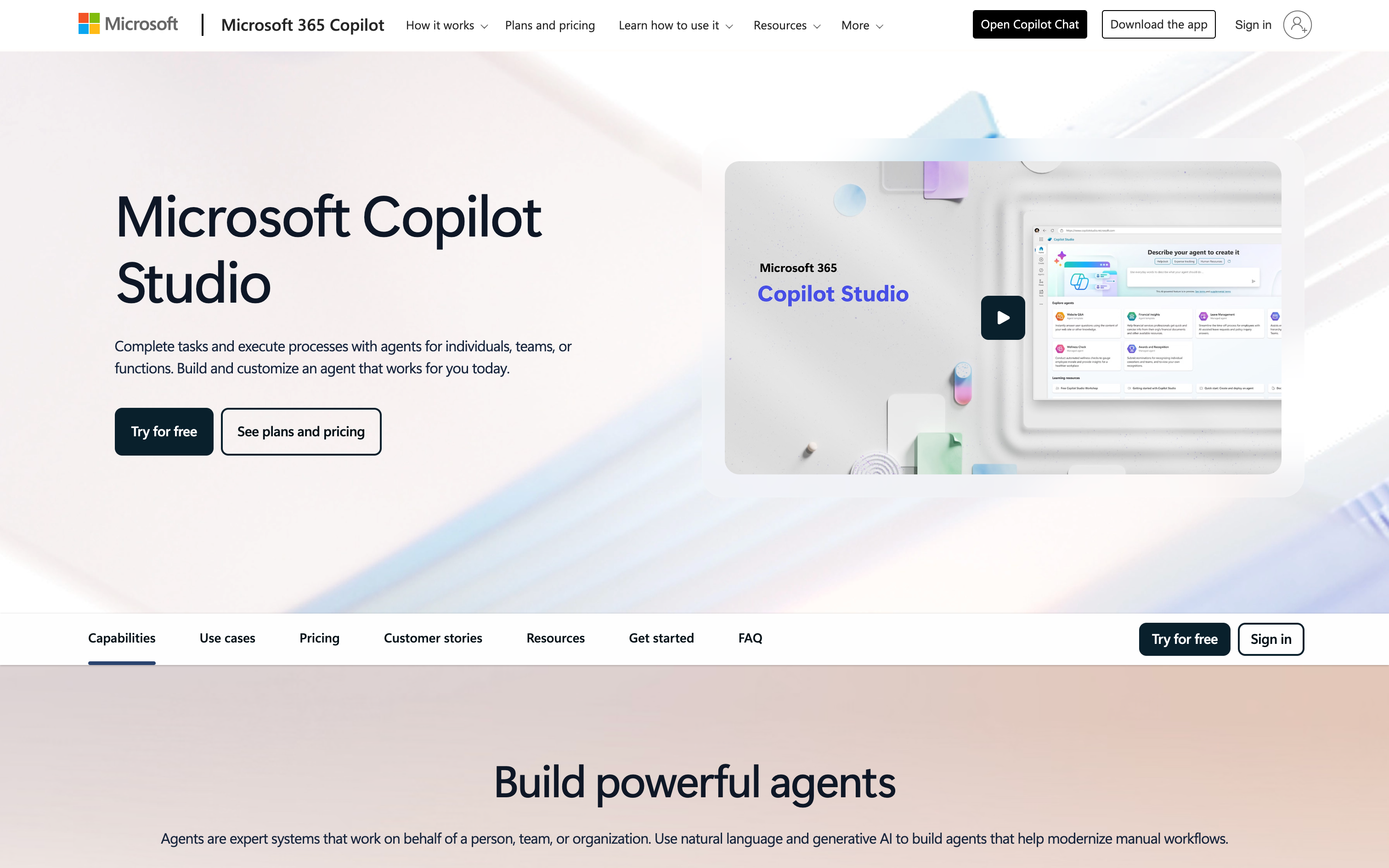
10. Microsoft Copilot Studio
Quick Overview
Microsoft’s enterprise builder with deep integration into Teams, Office, and Azure AD.
Best For
Microsoft-standardized enterprises.
Pros
Strong governance controls Native M365 integration RBAC and identity baked in
Cons
Licensing complexity Limited outside Microsoft ecosystem
Pricing
Enterprise licensing.
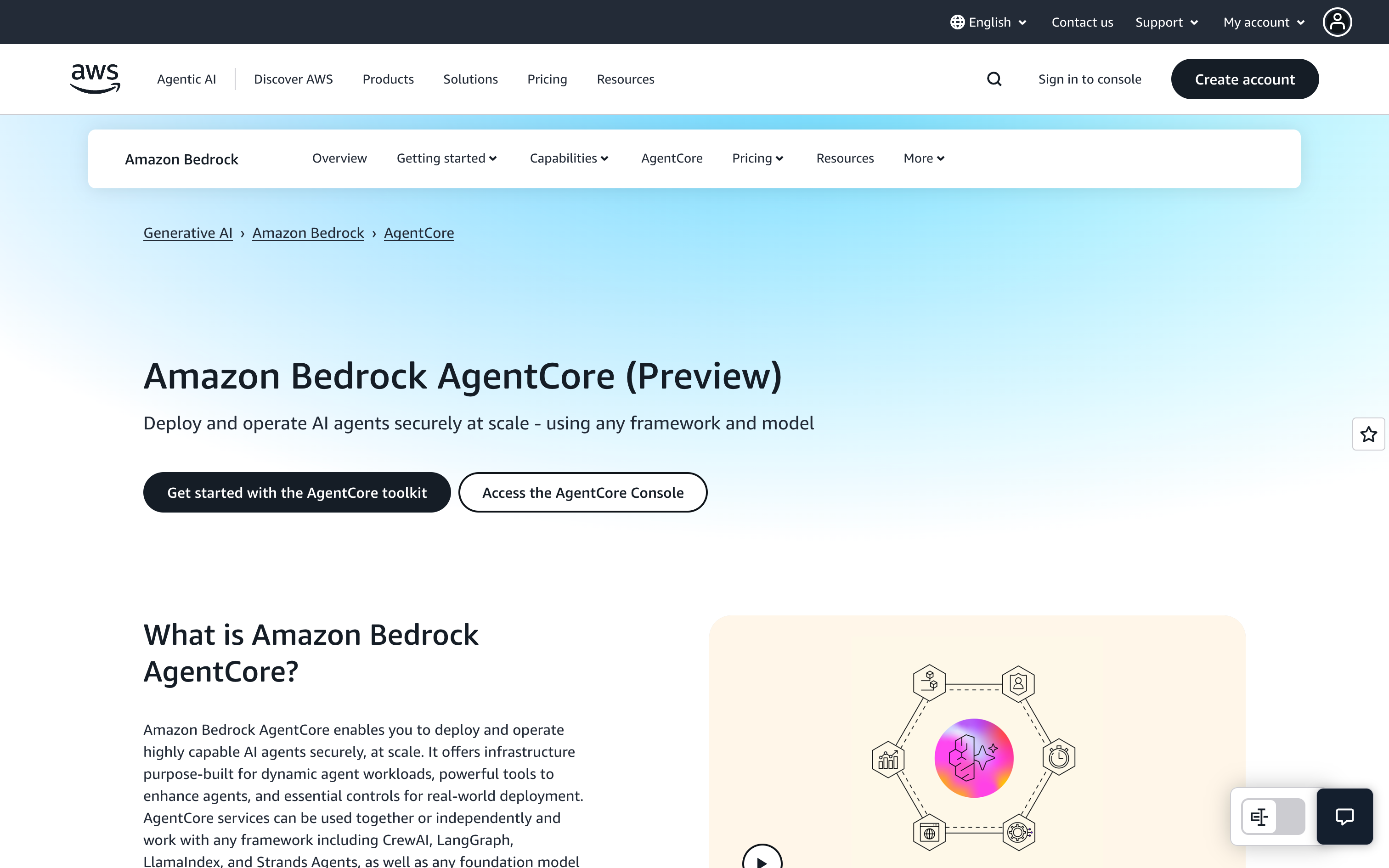
11. AWS Bedrock AgentCore
Quick Overview
Amazon’s new agent framework inside Bedrock.
Best For
AWS-centric enterprises.
Pros
Modular design Strong infra support Serverless scalability
Cons
Early in rollout Ecosystem still maturing
Pricing
Usage-based via AWS.
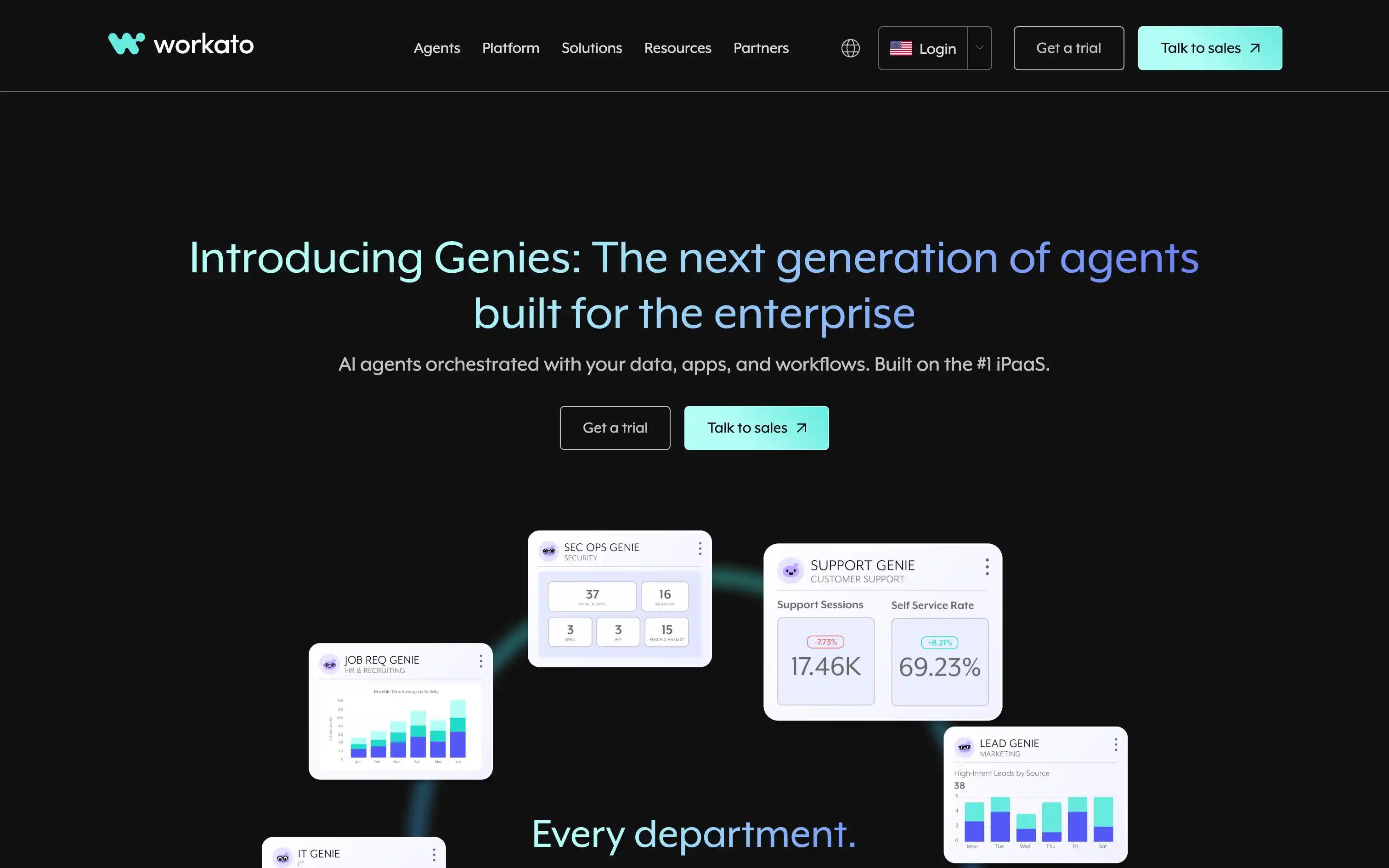
12. Workato
Quick Overview
An enterprise connecter (iPaaS) with growing AI features.
Best For
Large organizations needing governance and SLA-backed automation.
Pros
Enterprise governance Pre-built connectors Monitoring & lifecycle management
Cons
Premium pricing AI features secondary to integration
Pricing
Enterprise contracts only.
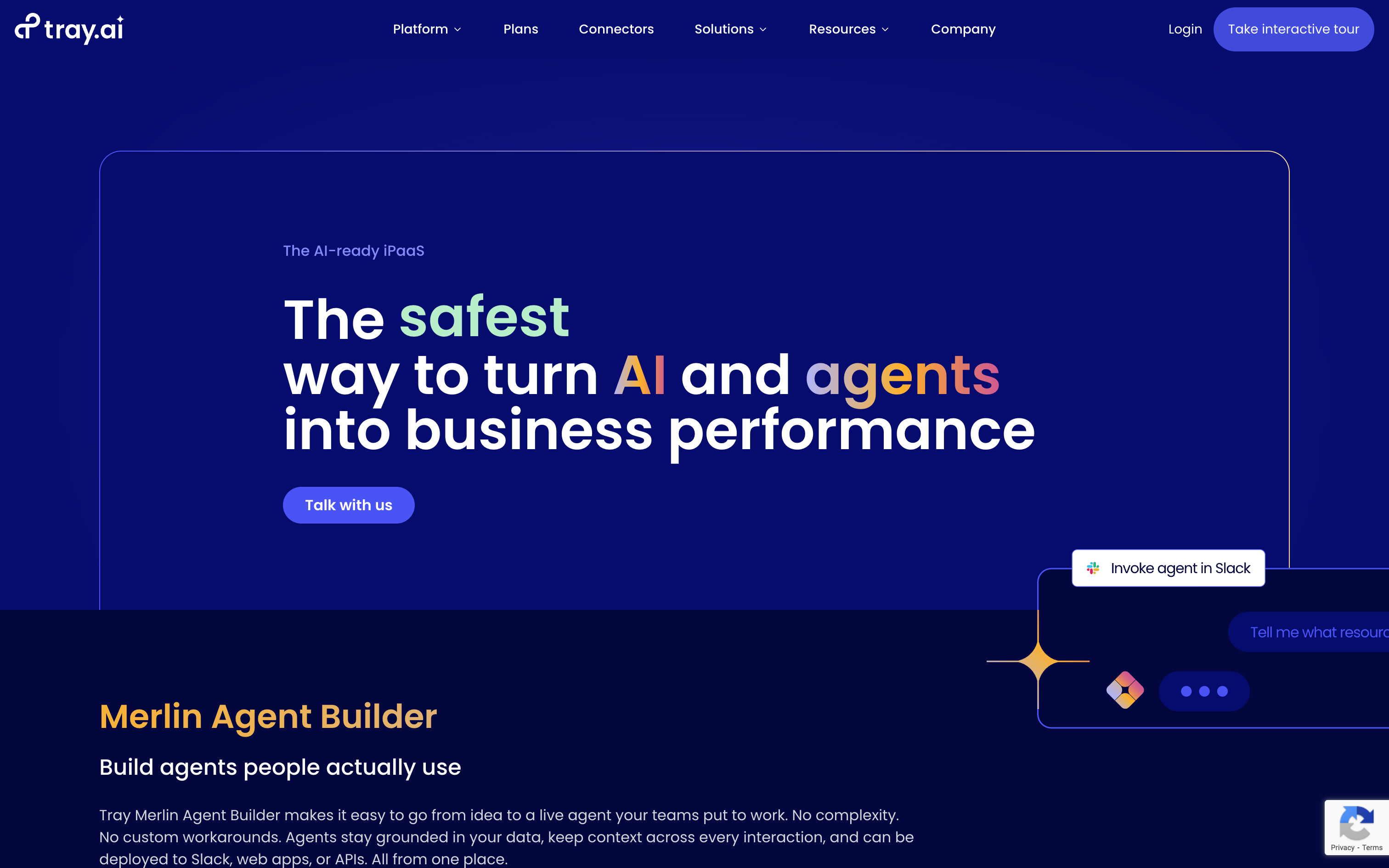
13. Tray.ai
Quick Overview
A low-code integration platform with strong developer tooling.
Best For
API-heavy enterprises needing hybrid connecter (iPaas) + AI.
Pros
Data-centric workflows Debugging & logging Collaboration controls
Cons
Higher costs Steeper learning curve
Pricing
Enterprise pricing.
AI agent builder platform comparison table
| Tool | Starting Price | Best For | Notable Features |
|---|---|---|---|
| Vertex AI Agent Builder (Google Cloud) | Usage-based (GCP) | GCP-standardized orgs needing RAG & compliance | Memory bank & sessions; managed runtime; prebuilt templates; Google ecosystem integration. |
| LangChain | Open source; Support plans | Developer-led, highly customized agents | Modular components; vast ecosystem; flexible RAG & memory; multi-model support. |
| AutoGen | Open source | Multi-agent collaboration & autonomy | Agent-to-agent patterns; self-reflection; orchestration for complex tasks. |
| CrewAI | Freemium; Enterprise | “Team of agents” with role specialization | Role-based agents; collaboration flows; visual design. |
| Dify | Freemium; Enterprise tiers | Low-code prototyping & simple workflows | Visual builder; model switching; connectors; quick starts. |
| OpenAI Agents SDK | Usage-based (API) | GPT-centric custom tooling & guardrails | Tool calling; function support; model upgrades. |
| LlamaIndex | Open source; Paid support | Knowledge-centric, RAG-heavy use cases | Connectors; vector search; RAG pipelines; compliance-friendly options. |
| Flowise AI | Free; Paid cloud | Visual prototyping for non-devs | Node-based builder; templates; fast onboarding. |
| Microsoft Azure Copilot Studio | Enterprise licensing | Microsoft-standardized enterprises | M365 & Teams integration; Entra ID (RBAC); governance controls. |
| AWS Bedrock AgentCore | Usage-based (AWS) | AWS-centric scale & compliance | Serverless patterns; modular services; deep AWS integration. |
| Workato | Enterprise contracts | Governed iPaaS + AI extensions | Large connector library; lifecycle mgmt; monitoring. |
| Tray.ai | Enterprise pricing | API-heavy, developer-friendly iPaaS + AI | Data-centric workflows; debugging & logging; collaboration controls. |
FAQs
1) What is an AI agent builder?
An AI agent builder lets you design, deploy, and monitor agents powered by LLMs without hand-coding all the orchestration yourself. You chain together reasoning, retrieval, tool use, and approvals in one place, usually with a visual or low-code interface plus an SDK. Strong platforms also add evaluations, versioning, and observability so every change can be tested and safely promoted to production.
2) Why do enterprises need an AI agent builder in 2026?
Most enterprises are stuck in pilot hell because custom scripts and ad hoc frameworks are hard to govern, monitor, and scale. An AI agent builder gives you a shared, governed environment where PMs, engineers, and compliance can collaborate, with prompt-based building, evals, and observability so you can move from pilots to production without losing control.
3) Who inside the enterprise benefits most from these platforms?
Product, operations, support, and sales teams benefit because they can describe workflows in plain language and get working agents, instead of waiting on engineering queues. Engineering, data, and security teams benefit because they get SDKs, governance, and deployment controls instead of debugging one-off scripts. The best platforms serve both sides: employees build and run AI apps safely while engineering keeps governance.
4) How do I choose the right AI agent builder for my org?
Start from your realities: cloud alignment, regulatory requirements, team skills, and the workflows you care about. If you need low-code collaboration with deep SDKs, evals, and enterprise governance across clouds, Vertex AI Agent Builder or LangChain are usually strong defaults. Tools like AutoGen or CrewAI are better fits when you need pure code-first flexibility or multi-agent orchestration. Cloud-native picks (Vertex AI, Azure Copilot Studio, AWS Bedrock AgentCore) shine when you are fully committed to a single ecosystem.
Extra Resources
The 2026 Guide to AI Agent Workflows →
Understanding your agent’s behavior in production →
How the Best Product and Engineering Teams Ship AI Solutions →
How Drata built an enterprise-grade AI solution →
How Revamp Reliably Runs 15M+ LLM Executions in Production →
Citations
[1] MIT NANDA. (2025). State of AI in Business 2025 Report .
[2] Capgemini Research Institute. (2025). Rise of agentic AI: How trust is the key to human-AI collaboration .